
The clean lines, high ceilings, and expansive walls of a new build home in Dublin, Ohio, present a unique opportunity. Where some see empty space, you see a canvas—a chance to build a personal art collection that brings character, depth, and intention to modern architecture. But finding art for a new build home in Dublin, OH, goes beyond simply filling a wall. It involves a shift in perspective from decorating a house to curating a home, choosing pieces that not only complement the space but also hold lasting value.
This guide is for homeowners in communities like Jerome Village and Tartan Ridge who want to invest in meaningful, museum-grade art. We will explore how to select works that match the scale of your home, understand the importance of archival quality, and connect with a gallery experience designed for intentional collecting. The goal is to move past mass-produced decor and begin building a legacy collection that reflects your personal story and elevates your daily environment.
Scaling Art for Modern Architecture in Dublin, OH
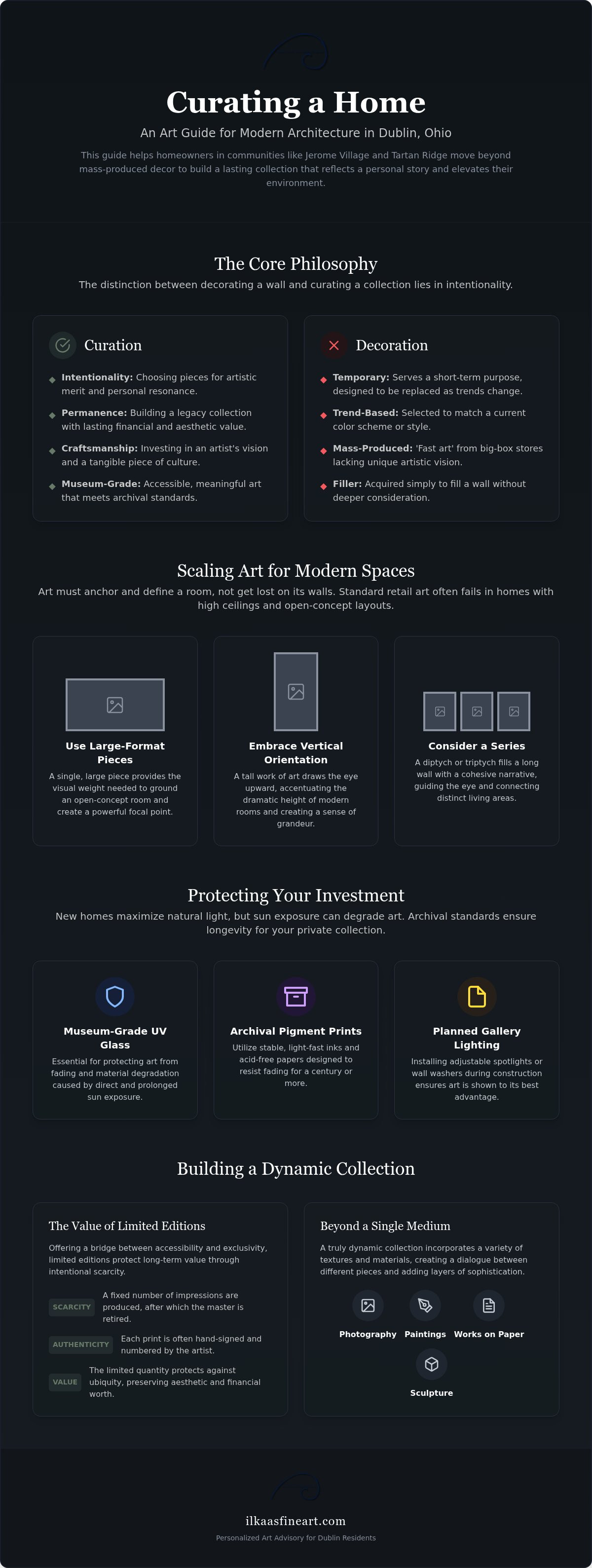
The architectural language of Dublin's new constructions—characterized by open-concept layouts, abundant natural light, and soaring vertical spaces—demands a thoughtful approach to art selection. These homes are designed for flow and airiness, which means the art must anchor and define spaces without disrupting them. Standard retail art, often produced for traditional eight-foot ceilings, frequently feels undersized and lost on the grand walls of a modern build, failing to command the presence required to ground the room.
- The unique spatial challenges of Dublin's new builds, from Jerome Village to Tartan Ridge, require art with significant scale and presence.
- ‘Standard’ retail art often fails in high-ceiling, open-concept homes because it lacks the visual weight to anchor the space.
- Large-format photography offers a clean, graphic impact that complements modern finishes, while mixed media installations can introduce texture and sculptural depth.
- In modern design, art anchors a room's focal point by establishing a visual and emotional center of gravity.
Addressing High Ceilings and Open Floor Plans
The expansive walls in a new build are a curator's dream, but they require a strategic eye. A vertical orientation can draw the eye upward, accentuating the height of a room and creating a sense of drama. Conversely, a large horizontal piece or a curated series can guide the viewer through an open floor plan, connecting distinct living areas like the dining and living rooms. The key is to balance the artwork with its surroundings. Negative space—the empty area around the art—is just as important as the piece itself. It allows the work to breathe, preventing a cluttered feeling and maintaining the clean, modern aesthetic of the home. For particularly long walls, consider a triptych or a diptych. This series of two or three related works can fill a large span with a cohesive narrative, offering more dynamic visual interest than a single, oversized piece.
Lighting Considerations for New Constructions
New homes in Dublin are often designed to maximize natural light, with large windows and sun-drenched rooms. While this creates a beautiful living environment, it poses a risk to fine art. Direct and prolonged sun exposure can cause colors to fade and materials to degrade over time. Evaluating the path of the sun throughout the day is the first step in protecting your collection. For walls that receive significant light, museum-grade glass with UV protection is essential. Furthermore, investing in archival pigment prints is critical. These prints use stable, light-fast inks and acid-free papers designed to resist fading for a century or more, ensuring the longevity of your art. For the most integrated solution, plan for dedicated gallery lighting during the construction phase. Adjustable spotlights or wall washers can be installed to illuminate your collection perfectly, ensuring it is shown to its best advantage while minimizing harmful exposure.
Curation vs. Decoration: Choosing Museum-Grade Art
The Value of Limited Edition Prints
Limited edition prints occupy a unique space in the art world, offering a bridge between the accessibility of a print and the exclusivity of an original work. By definition, a limited edition is a fixed number of impressions produced from a single master, after which the plate or file is retired. This scarcity is what protects its value. Each print is often hand-signed and numbered by the artist, such as the masterful silver gelatin works of Roman Loranc or the hand-painted photographs of Kim Weston, adding a layer of authenticity and direct connection to the creator. The limited quantity ensures that the work will not become ubiquitous, protecting its long-term aesthetic and financial value for collectors. It is an intentional decision to own something rare and thoughtfully produced. You can explore a curated approach to these works in The Limited Edition Print Collecting Guide.
Beyond Photography: Mixed Media and Paintings
Navigating the Art Scene from Dublin to Columbus
For Dublin residents, the journey to finding exceptional art is a short, pleasant drive to the heart of Columbus. This trip is more than a simple errand; it is a cultural transition from the modern suburbs to the historic grandeur of Olde Towne East. Ilkaa’s Fine Art is located within the renovated Joseph Cherrington House at 785 East Broad Street, a setting that enriches the art-viewing experience. The gallery celebrated its public opening on May 16, 2026, a date that marked a significant milestone for the Central Ohio art community. Visiting a gallery in a historic home provides a unique context, allowing you to see museum-grade art in a warm, residential environment that feels more like a home than a sterile white cube. It helps you envision how a piece might live in your own space, making the selection process more intuitive and personal. To plan your visit, you can find details and schedule an appointment online.
The Gallery Experience: Intention and Connection
The modern retail environment is designed for speed and volume. In contrast, the gallery experience at Ilkaa’s Fine Art is intentionally unhurried. It is a space designed for slower looking, where conversation and discovery are valued above the transaction. Finding art that resonates on a personal level is a process that cannot be rushed. It involves learning about the artist's technique, understanding the story behind the image, and allowing yourself the time to form a genuine connection with the work. The home-like setting of the Joseph Cherrington House facilitates this process. Seeing a large-scale photograph above a fireplace or a series of works along a hallway helps bridge the gap between the gallery wall and your own, making the prospect of living with fine art feel natural and approachable.
Connecting with the Central Ohio Creative Community
A great gallery serves as more than a place of commerce; it is a hub for the creative community. Through collaborations like the small rotating monthly curation with “Pretty in Ink,” Ilkaa’s Fine Art fosters a dynamic local arts ecosystem. It acts as a bridge, connecting international artists with Dublin collectors and introducing our community to new perspectives. This commitment to community extends to its visitors. Dublin residents are invited to become part of the gallery's ongoing story, to attend artist talks, and to engage with the vibrant cultural landscape of Central Ohio. It is an opportunity to not only build a personal collection but also to support and participate in the region's artistic growth.
Archival Standards and Longevity for Private Collections
When you invest in a piece of fine art, you are investing in its future. That is why understanding archival standards is essential for any serious collector. Archival pigment prints are the professional choice for color photography due to their exceptional stability and color fidelity. The term ‘museum-grade’ refers to a strict set of standards for every component: the paper must be acid-free and made from 100% cotton rag, the inks must be pigment-based and rated for lightfastness of 100 years or more, and the mounting materials must also be archival to prevent degradation. These measures ensure that your investment is protected from fading, yellowing, or environmental damage for decades. This commitment to quality is what separates a fine art print from a standard poster. A standard print is a temporary decoration; a silver gelatin print, made through a traditional chemical process, is a permanent, handcrafted object with rich tonal depth.
Understanding Certificates of Authenticity
A Certificate of Authenticity (COA) is a crucial document that accompanies any legitimate limited edition print or original artwork. It is the work's official record and should include several key details: the artist's name, the title of the work, the exact dimensions, the medium (e.g., archival pigment print, silver gelatin print), the edition number (e.g., 3/25), and the artist's signature. This document is your guarantee of the work's provenance—its history of ownership. Provenance is critical for the future valuation of your collection, as it confirms the piece's origin and authenticity. A reputable gallery plays a vital role in this process, providing professionally authenticated works from respected artists and ensuring you have the proper documentation to protect your investment.
Caring for Your Art in a New Home
Once you bring a piece of art into your new Dublin home, proper care is essential to its preservation. The environmental conditions of a new build are often well-controlled, but there are still best practices to follow. Hang artwork away from direct HVAC vents, as fluctuations in temperature and humidity can stress the materials over time. Avoid hanging valuable pieces in areas with high moisture, such as bathrooms. For large-format or particularly heavy works, professional installation is highly recommended. A professional installer will ensure the piece is securely mounted with the correct hardware, protecting both the art and your walls. For more detailed guidance, consider this guide on how to care for fine art photography prints.
Personalized Art Advisory for Dublin Residents
The process of curating art for an entire home can feel daunting, especially when starting with the blank slate of a new build. This is where art advisory services become invaluable. An art advisor helps bridge the gap between your architectural plans and a finished, cohesive collection. Curator Ilkaa Amalia works with collectors to understand their aesthetic goals, the specific needs of their space, and their long-term investment strategy. This collaborative process ensures that the final selection feels personal, intentional, and perfectly integrated with the home's design. The gallery serves as a dedicated partner for Dublin-based homeowners and interior designers, offering guidance from the initial consultation to the final installation. You can begin the process by scheduling a private viewing at the Joseph Cherrington House to discuss your vision.
Building a Thematic Photography Portfolio
For a large new build with multiple rooms, building a collection around a theme can create a powerful, narrative-driven experience. A theme can be based on a subject (landscapes, portraiture), a concept (memory, transformation), or a specific aesthetic (minimalism, black and white). An advisor can help you select works that tell a story as you move through the home. This might involve curating a collection from internationally respected photographers like Cristina Mittermeier, whose work documents the intersection of humanity and nature, or Mark Arbeit, known for his elegant fashion and portrait photography. The inclusion of one-of-a-kind works, such as a hand-painted photograph or a unique polaroid, can further elevate the collection, creating a unique residential identity that is impossible to replicate.
The Role of the Atelier in Modern Curation
Ilkaa’s Fine Art is more than a gallery; it is also an atelier—a workshop or studio used by an artist. This dual identity means it is a space for both curation and creation, home to resident photographer Millie Franz. Seeing where and how art is made provides a deeper connection to the final piece. It demystifies the artistic process and enhances your appreciation for the skill and craftsmanship involved. This connection is at the heart of intentional collecting. It transforms the act of buying art from a simple purchase into a meaningful relationship with an artist and their practice. The journey begins with curiosity. We invite you to browse the online collection or visit the gallery to discover art that will bring the walls of your new Dublin home to life.
Frequently Asked Questions
-
How do I choose the right size art for a large wall in a new build?
For a large wall, aim for a single statement piece that occupies 60-75% of the wall's width, or a gallery wall that is scaled to the same proportion. In rooms with high ceilings, consider a vertically oriented piece to draw the eye upward and accentuate the room's height. -
What is the difference between a museum-grade print and a standard poster?
A museum-grade print is made with archival materials, including acid-free 100% cotton paper and stable pigment-based inks, designed to resist fading for over 100 years. A standard poster is typically printed on wood-pulp paper with dye-based inks, which can fade and yellow in a few years. -
Should I buy photography or paintings for a modern Dublin home?
Both can work beautifully. Large-scale photography often complements modern architecture with its clean lines and graphic impact. Paintings can add texture, color, and a tactile quality. The best choice depends on your personal taste and the desired atmosphere for the room. Many collectors find that mixing mediums creates the most dynamic interior. -
Is it better to buy one large statement piece or a gallery wall?
This depends on the space and your goal. A single large statement piece creates a powerful, singular focal point, ideal for a living room or entryway. A gallery wall offers more flexibility and a chance to tell a story with multiple pieces, which can be perfect for a long hallway or a more personal space like an office. -
Is it better to buy one large statement piece or a gallery wall?
This depends on the space and your goal. A single large statement piece creates a powerful, singular focal point, ideal for a living room or entryway. A gallery wall offers more flexibility and a chance to tell a story with multiple pieces, which can be perfect for a long hallway or a more personal space like an office. If you are curating themed prints to build an inspiring gallery display for these spaces, check out American Luxury Gifts. -
How do I know if a limited edition print is a good investment?
Look for prints from established or mid-career artists with a strong exhibition history. The edition size should be relatively small (typically under 50). Ensure it comes with a Certificate of Authenticity signed by the artist. While appreciation is never guaranteed, these factors contribute to a print's ability to hold or increase its value. -
Can I schedule a private viewing at Ilkaa’s Fine Art?
Yes, private viewings are available by appointment. This allows for a focused, unhurried experience where you can discuss your collecting goals and view works in a quiet, intentional setting. -
Does the gallery offer art advisory for residents in Dublin, OH?
Yes, Ilkaa’s Fine Art offers personalized art advisory services for homeowners and designers in Dublin and the greater Columbus area. This service helps clients build cohesive collections tailored to their space, aesthetic, and budget. -
What artists are currently featured at the Joseph Cherrington House gallery?
The gallery features a curated roster of internationally respected photographers, including Kim Weston, Roman Loranc, Cristina Mittermeier, and Mark Arbeit, alongside resident photographer Millie Franz. The featured artists and exhibitions rotate, so it is best to check the gallery website or visit for the most current information.
Disclaimer
Information is provided for general editorial and educational purposes. Artwork availability, pricing, dimensions, framing, edition details, exhibition information, and event schedules are subject to change. Please contact Ilkaa’s Fine Art Gallery & Atelier for the most current information.
© 2026 Ilkaa’s Fine Art Gallery & Atelier. Article text, gallery photographs, graphics, and other original gallery content may not be copied, reproduced, republished, distributed, modified, or used for commercial purposes without prior written permission. Copyright in individual artworks, artist photographs, and other third-party materials remains with the respective artists, photographers, estates, or rights holders. Brief quotations and links may be used with appropriate attribution where permitted by law.