
The most profound art often reveals its true character when viewed within the weathered brick and quiet history of a preserved 19th-century home rather than a sterile hall. For the discerning collector, finding art galleries in German Village Columbus Ohio that offer this level of intimacy can feel like a search for a hidden archive. You likely seek more than a casual souvenir. You require work that carries technical mastery, refined composition, and an enduring legacy.
This guide provides a curated selection of the district's most sophisticated spaces, moving beyond simple shop listings to highlight true centers of fine art. You'll discover how the historic house gallery model creates a unique dialogue between the medium and the environment. From traditional American Impressionism to the precise craftsmanship of museum-grade archival photography, we explore where to find investment-grade pieces that honor both the artist's intent and the collector's standards. We provide the context needed to understand the specific atmosphere of each atelier, ensuring your visit is as intentional as the art itself.
Key Takeaways
- Understand how the historic house gallery model creates a unique dialogue between fine art and the district's 19th-century architecture.
- Pinpoint the most sophisticated art galleries in German Village Columbus Ohio that prioritize archival quality and technical mastery over mass-market appeal.
- Learn the essential standards for investment-grade photography, including the nuances of archival pigment prints and true edition scarcity.
- Discover a curated approach to navigating the neighborhood's cobblestone streets to find the most exclusive residential-style exhibition spaces.
- Identify where to view the Atelier Collection and other high-register works that represent the pinnacle of the local fine art scene.
The Architectural Soul of Art Galleries in German Village
German Village isn't merely a neighborhood; it's a preserved 19th-century enclave. The art galleries in German Village Columbus Ohio exist within this specific context, housed primarily in restored brick cottages and residences. These aren't the sterile, industrial spaces found in many urban centers. Instead, they're intimate sanctuaries. The transition from the cobblestone streets to a quiet courtyard garden prepares the mind for a different kind of observation. It's a contemplative shift. The environment demands a slower pulse. You aren't just entering a place of commerce; you're entering a curated history.
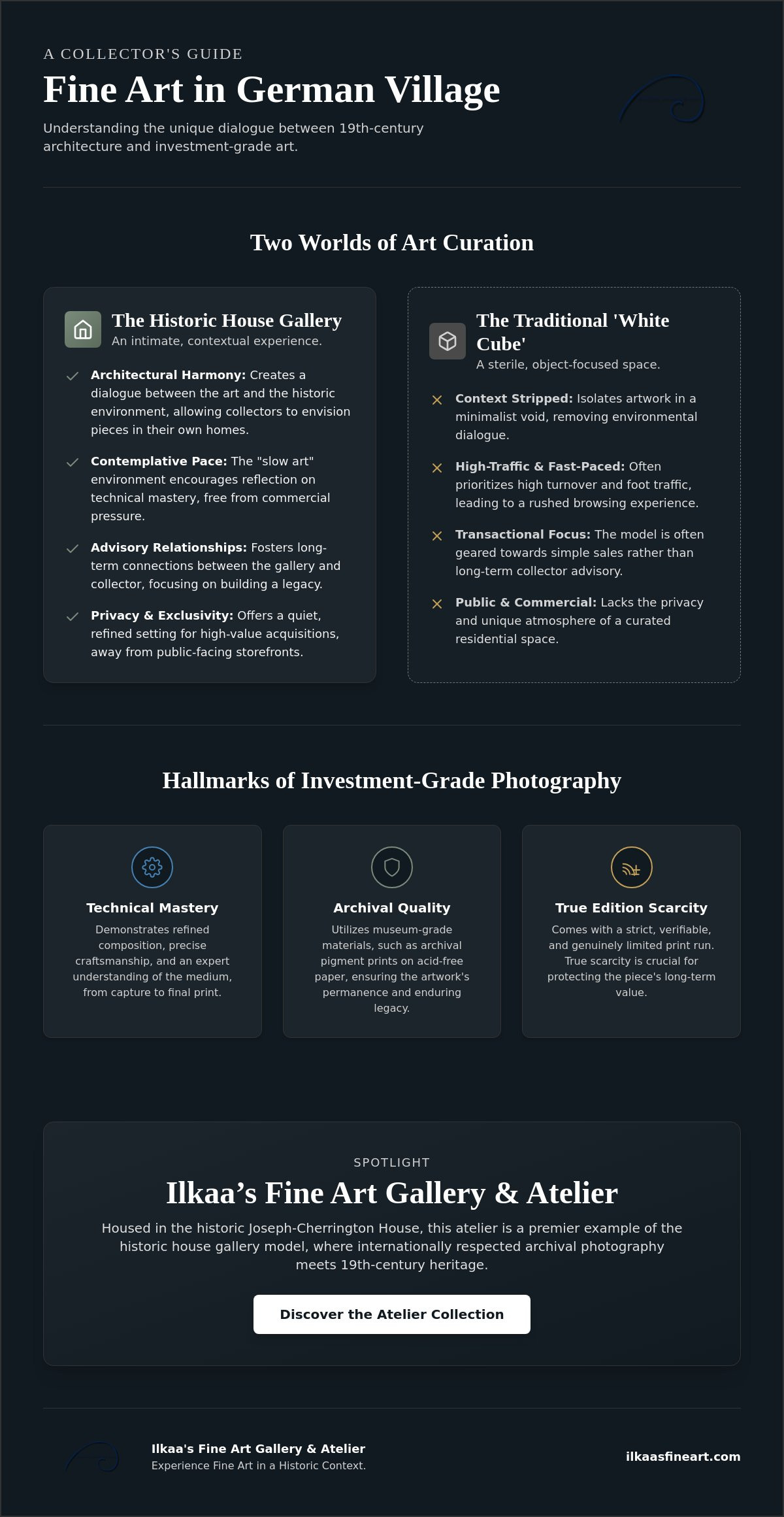
While the "White Cube" galleries of downtown Columbus favor a high-contrast, minimalist void, the Village offers texture. The German Village history is etched into the very walls that hold the art. This architectural preservation creates a unique sanctuary for collectors who value the physical medium as much as the subject matter. The building itself becomes a silent partner in the exhibition. It's a rejection of the temporary in favor of the permanent. Within these walls, the art galleries in German Village Columbus Ohio provide a bridge between the craftsmanship of the past and the artistic vision of the present.
The Intersection of History and Aesthetics
There's a profound visual harmony in this district. The warmth of the original red brick architecture provides a natural, earth-toned backdrop that complements archival art frames and classic photographic mounts. This isn't accidental. The German Village Commission maintains strict standards to ensure the neighborhood's aesthetic integrity remains intact. Viewing a piece of fine art in a space that feels like a refined home removes the cold barrier often found in commercial galleries. It allows the collector to envision the work within their own private environment. The psychological impact is immediate. One doesn't just look at the art; one lives with it for a moment.
Why Collectors Prefer the District's Intimacy
The pace here is different. It's the "slow art" movement in practice. Visitors are encouraged to linger, reflecting on the technical mastery of a piece rather than browsing with haste. Historic windows offer a specific quality of natural light that shifts throughout the day, altering the perception of shadows in a photograph or the depth of oil on canvas. For high-value acquisitions, these residential-turned-gallery spaces offer a level of privacy that public-facing storefronts can't match. It's an experience defined by quietude and exclusivity. It's where the creator's legacy meets the collector's future, mediated by the walls of a historic atelier.
Beyond the White Cube: The Historic House Gallery Experience
The traditional "white cube" gallery serves a specific, clinical purpose. It strips away context to isolate the object. In contrast, the historic house gallery model provides a domestic resonance that bridges the gap between the creator's studio and the collector's home. Collectors searching for art galleries in German Village Columbus Ohio often find that the most profound encounters happen in these quiet, residential-style spaces. These environments don't just display work; they contextualize it within a heritage of craftsmanship and architectural permanence. It's a more human approach to curation.
This model favors depth over volume. While larger commercial institutions often prioritize high-traffic exhibitions and rapid turnover, the galleries within these historic districts operate at a different tempo. They offer a service-oriented experience where the relationship between the gallery and the collector is one of long-term advisory rather than a simple transaction. It's about building a legacy, piece by piece. Within these walls, the role of the 'Atelier' becomes central, acting as a space where the technical studio environment meets the refined exhibition hall.
The Joseph-Cherrington House: A Landmark for Fine Art
A premier example of this art-focused restoration is the Joseph-Cherrington House. Having held its grand opening on May 16, 2026, the space now serves as the permanent home for Ilkaa’s Fine Art Gallery & Atelier. The environment is one of absolute intentionality. The heavy silence of the historic interior allows the viewer to engage with internationally respected photography without the distractions of urban noise. The experience is sensory. The tactile nature of the space, from the original woodwork to the specific scent of archival paper, reinforces the value of the physical medium. This heritage informs every selection, ensuring each work meets the highest standards of technical mastery.
Curatorial Intent in Private Spaces
Within these private walls, curators Ilkaa Amalia and Millie Franz craft cohesive narratives that span generations of artistic achievement. The domestic scale of the rooms allows for a more focused curatorial intent. It's an ideal setting for art advisory, where collectors can discuss provenance and authenticity in a relaxed, private atmosphere. Understanding the history of a piece is as important as its visual impact. This environment fosters a deeper appreciation for the Atelier Collection and the archival standards required for true investment-grade art. In these intimate settings, the journey of finding the right piece becomes as rewarding as the acquisition itself. For those navigating the landscape of art galleries in German Village Columbus Ohio, these refined spaces offer a level of intimacy that no commercial institution can replicate.
Photography as Fine Art: A New Chapter in the Columbus Art Scene
The artistic narrative of the district is shifting. While many art galleries in German Village Columbus Ohio have historically focused on traditional media like American Impressionism, a new chapter has emerged. Museum-grade photography now holds a central place in the local scene. This transition reflects a global appreciation for the camera as a tool of high-level craftsmanship. Collectors are moving beyond the surface of the image to examine the technical mastery behind the print. It's a rigorous approach to a modern medium. For those visiting art galleries in German Village Columbus Ohio, the rise of the photographic medium offers a fresh perspective on what it means to collect in the 21st century.
Fine art photography is defined by its archival standards and the discipline of the edition. In the 2026 market, the distinction between a casual photograph and a fine art print is absolute. Technical mastery involves a deep understanding of light, chemistry, and the physical properties of paper. Archival Pigment Prints have become the standard for those seeking permanence. This commitment to quality has made photography a cornerstone of sophisticated portfolios in the city. It offers a visual language that is both contemporary and deeply rooted in the traditions of fine art. The result is a medium that commands respect for its technical precision and its evocative power.
Investing in Limited Edition Photography
Scarcity defines the market for fine art photography. Limited Edition Prints provide a clear framework for value, ensuring that each work remains a rare acquisition. Authenticated and numbered, these pieces offer a transparent provenance that collectors demand. In a saturated digital environment, the physical print is a testament to the artist's technical intent. Certificates of authenticity accompany these high-value sales, acting as a guarantee of artistic integrity. This medium offers a sophisticated entry point into the world of investment-grade art, allowing for the curation of a diverse and resilient portfolio.
The Atelier Collection: Rare and Archival Works
The Atelier Collection serves as a repository for rare photographic states and museum-grade works. Here, the focus remains on longevity and pigment stability. Archival Pigment Prints utilize advanced chemistry to ensure the image survives for generations without degradation. This level of production is essential for serious collectors who view art as a long-term asset. They seek the tactile depth that only a master print can provide. By prioritizing rare archival collections, collectors align themselves with a tradition of excellence that transcends temporary trends, securing works that hold their aesthetic and historical weight.
Navigating the German Village Art Walk: Tips for Discerning Collectors
The experience of visiting art galleries in German Village Columbus Ohio is defined by the neighborhood's deliberate pace. It's a journey best taken on foot, allowing the architectural details to set the tone for the art within. One begins at the northern edge, where the Beck Street corridor houses traditional masters and established institutions. As you move south toward the heart of the district, the atmosphere shifts from commercial to domestic. The architecture becomes more intimate. The cobblestones of 3rd Street provide a rhythmic backdrop to the walk, leading you past hidden courtyard gardens that mirror the curated interiors of the galleries themselves.
For the high-end visitor, logistics require foresight. While many shops offer street-side access, collectors often prefer the discretion of quiet street parking near Schiller Park. Alternatively, valet options are available at several of the district's refined dining establishments, providing a seamless transition from a midday viewing to a reflective lunch. This is art consumption as a lifestyle. It's an integration of aesthetic appreciation and historical preservation. After a viewing, the park's expansive gardens offer the ideal space to reflect on a potential acquisition before finalizing the details with a curator.
A Curated Walking Route
A logical progression starts with the traditional estates on Beck Street before moving toward the residential-style exhibition spaces. The route should culminate at the historic Joseph-Cherrington House. This path allows the collector to contrast classical American works with modern archival photography. While the district is vibrant on weekends, mid-week visits are recommended for those seeking a private, quiet viewing experience. Be aware that from March 21 to November 22, 2026, Saturday and Sunday afternoons often host the neighborhood's walking tours, which may increase foot traffic in public areas.
Etiquette and Advisory Services
Engaging with a curator in a private atelier differs significantly from a casual "Gallery Hop" experience. For the serious collector, scheduling an appointment is essential. This ensures the curator is available for a focused dialogue regarding provenance and collection building. When entering these spaces, it's customary to research the current exhibition roster beforehand. This preparation signals a shared reverence for the artistic process. Curators at these levels act as advisors, guiding you through rare editions and archival standards. To begin your own collection with an expert eye, schedule a private viewing at Ilkaa’s Fine Art.
Ilkaa’s Fine Art: Where Archival Photography Meets Historic Heritage
Within the landscape of art galleries in German Village Columbus Ohio, Ilkaa’s Fine Art Gallery & Atelier occupies a singular position. It's a space defined by the rigorous standards of fine art photography. Established in its permanent home at the Joseph-Cherrington House in May 2026, the gallery serves as a premier destination for those who value the intersection of heritage and technical mastery. This isn't a gallery for the casual observer. It's an atelier for the serious enthusiast who understands that a photograph is a physical object of enduring value. The focus remains on internationally respected photographers and rare archival collections that define the modern art market.
The gallery acts as a bridge between the creator's vision and the collector's portfolio. It offers more than visual appeal. It provides investment-grade assets. Every work is an authenticated, numbered piece of history. Scarcity is maintained through strict editioning. This commitment to the physical medium of film and the archival process ensures that each acquisition holds its value over time. For those seeking the pinnacle of art galleries in German Village Columbus Ohio, this space offers a level of exclusivity and expertise that is rare in the region. The inaugural exhibition, "Vernisage: Spring 2026," set the standard for the technical precision and atmospheric depth that visitors can expect from this institution.
A Curated Roster of Global Talent
The gallery’s roster is a testament to artistic legacy. Each artist is selected for their technical mastery and their contribution to the photographic medium. The Atelier environment is particularly significant. It allows collectors to see the process behind the print. This transparency is vital. It reinforces the appreciation for the tactile nature of film and the precision required for Archival Pigment Prints. It's a sanctuary for the physical medium. Here, the passage of time is captured through light and chemistry, resulting in works that are both timeless and evocative. Seeing these works in progress provides a rare insight into the archival standards required for museum-grade art.
Building Your Collection with Expert Guidance
Curators Ilkaa Amalia and Millie Franz provide the specialized advisory services necessary for building a significant collection. The transition from admirer to serious collector requires more than just interest. It requires an understanding of provenance, archival stability, and the nuances of The Atelier Collection. Their guidance is methodical and personalized. They assist in identifying works that align with a collector’s existing aesthetic while introducing new, rare photographic states. This professional partnership ensures that every acquisition is intentional and well-documented. To begin this journey and view Limited Edition Prints of exceptional quality, Explore the current collection at Ilkaa’s Fine Art Gallery.
Defining Your Private Collection
Collecting fine art is an act of preservation. In this historic district, that preservation extends to the very walls that house the work. We've explored how the domestic gallery model creates an intimate sanctuary for technical mastery. The rise of museum-grade photography represents a significant evolution for art galleries in German Village Columbus Ohio. It's an era defined by archival pigment stability and the rigorous discipline of limited editions. These works don't just decorate a space; they anchor a legacy.
Ilkaa’s Fine Art Gallery & Atelier acts as the essential bridge between this heritage and your evolving portfolio. Situated within the historic Joseph-Cherrington House, the gallery is curated by internationally respected photography experts. We specialize in museum-grade limited edition prints that meet the highest standards of technical excellence. This environment ensures that every piece you acquire carries the weight of artistic integrity and historical permanence. Your journey as a discerning collector deserves a setting that honors the depth of the artistic process.
We invite you to experience this dialogue between architecture and fine art in person. Visit Ilkaa’s Fine Art Gallery & Atelier for a Private Viewing.
Frequently Asked Questions
What are the best art galleries to visit in German Village, Columbus?
The most distinguished art galleries in German Village Columbus Ohio include Ilkaa’s Fine Art Gallery & Atelier and Keny Galleries. These institutions represent the district's commitment to technical mastery. While Keny Galleries focuses on American Impressionism, Ilkaa’s provides a dedicated space for museum-grade photography within the historic Joseph-Cherrington House. Both offer a refined environment that contrasts with traditional commercial spaces.
Is there fine art photography for sale in German Village?
Fine art photography is available at specialized ateliers like Ilkaa’s Fine Art Gallery & Atelier. This space focuses on internationally respected works that meet rigorous archival standards. Collectors can find Archival Pigment Prints and pieces from the Atelier Collection. These works are produced with high-register technical precision, ensuring longevity and aesthetic depth for serious enthusiasts who value the physical medium of film.
What is a historic house gallery and how does it differ from a regular gallery?
A historic house gallery is an exhibition space situated within a preserved 19th-century residence. Unlike the sterile "white cube" of a regular gallery, this model provides a domestic resonance. It allows collectors to view work in a setting that mirrors a refined home. This context emphasizes the relationship between the art, the architecture, and the passage of time, encouraging a slower pace of observation.
Are the art galleries in German Village open to the public or by appointment?
Access varies by institution, though several premier art galleries in German Village Columbus Ohio operate by private appointment. Ilkaa’s Fine Art Gallery & Atelier utilizes this model to ensure an exclusive, focused dialogue between the curator and the collector. Standard public hours are common at more traditional storefronts; however, the appointment model is preferred for high-value advisory and the building of serious collections.
Where can I find investment-grade art prints in Columbus, Ohio?
Investment-grade prints are found at galleries that prioritize archival quality and scarcity, such as those in the German Village district. Collectors should look for Limited Edition Prints that include certificates of authenticity. The Atelier Collection represents a benchmark for this level of work. These pieces are held to museum standards, ensuring they remain resilient assets within a sophisticated portfolio over many decades.
Is parking available for gallery visitors in German Village?
Visitors typically utilize street parking, which is readily available on the quiet residential blocks surrounding Schiller Park. For a more seamless experience, many collectors use valet services at the district's upscale restaurants. The neighborhood's compact nature makes it easy to transition from a vehicle to a contemplative walk along the cobblestone streets toward your chosen gallery or atelier.
What is the difference between an open edition and a limited edition print?
The primary distinction lies in scarcity and technical intent. Limited Edition Prints are restricted to a specific, numbered run, which protects the work's value and exclusivity. Open editions are mass-produced without a set limit, making them unsuitable for serious investment. A limited edition print is often accompanied by documentation of its provenance and is produced using superior archival pigment standards.
How do I start building a fine art photography collection in Columbus?
Building a collection begins with identifying a specific artistic focus and consulting with an authoritative curator. Focus on technical mastery and the physical medium of film. It's essential to prioritize works with high archival standards, such as Archival Pigment Prints. Establishing a relationship with a local atelier provides the expert guidance needed to navigate rare editions and technical states while ensuring the integrity of your acquisitions.
Disclaimer
Information is provided for general editorial and educational purposes. Artwork availability, pricing, dimensions, framing, edition details, exhibition information, and event schedules are subject to change. Please contact Ilkaa’s Fine Art Gallery & Atelier for the most current information.
© 2026 Ilkaa’s Fine Art Gallery & Atelier. Article text, gallery photographs, graphics, and other original gallery content may not be copied, reproduced, republished, distributed, modified, or used for commercial purposes without prior written permission. Copyright in individual artworks, artist photographs, and other third-party materials remains with the respective artists, photographers, estates, or rights holders. Brief quotations and links may be used with appropriate attribution where permitted by law.