
What if the art in a Victorian Village home didn’t need to look Victorian to belong there? Ornate trim, tall ceilings, and patterned surfaces can make choosing artwork feel delicate, especially if you worry that a contemporary piece will compete with the architecture. But decorating a Victorian Village home with art isn’t about recreating a period interior. It’s about letting the home’s character frame the work while making room for the lives and tastes within it.
A considered room balances respect for historic details with a personal point of view. A painting, photograph, work on paper, or small sculpture can feel at home through thoughtful scale, placement, material, and contrast, not because it matches the era. Ilkaa’s Fine Art Gallery & Atelier, in Columbus’s historic Joseph-Cherrington House, offers a local example of art and historic architecture sharing a space without either disappearing.
Use the practical steps below to assess walls and sightlines, choose work that feels meaningful rather than overly matched, and create visual balance around moldings, mantels, and other defining details. The aim is a home with its history in view and its present-day occupants at its heart.
Key Takeaways
- For decorating a Victorian Village home with art, let the architecture inform your choices without requiring every piece to match a historical period.
- Use line, color, surface, and texture to decide whether artwork should echo a room’s details or offer a considered contrast.
- Follow a simple sequence: consider the room’s purpose, identify a viewing point, assess scale, choose a work, then test its position.
- Compare a focal wall, a transition space, and a grouping of works by how people move through and use the room.
- See historic architecture and varied art together at Ilkaa’s Fine Art Gallery & Atelier in Columbus.
Start with the Home: What Makes Art Feel at Home in Victorian Village?
Let the art respond to the house without turning the rooms into a period display. In a Victorian Village home, original details such as trim, mantels, doors, and built-ins already carry visual weight. Artwork doesn’t need to imitate them. Instead, look for a thoughtful relationship shaped by the room’s proportions and the way people use the space.
That relationship comes down to context, scale, and personal meaning. A work might draw the eye toward a fireplace, give focus to a quieter wall, or offer a pause in a hallway. Its colors and materials can echo the room or contrast with it. Either approach can feel settled when the work suits the available wall area, can be seen comfortably from a usual viewing point, and matters to the people who live there.
Reading a Victorian Village Room Before Choosing Art
First, notice what already draws attention: a mantel, a window, an uninterrupted stretch of wall, or a doorway that frames a view into the next room. Consider the room’s daily purpose, too. A living room used for conversation calls for a different kind of viewing than a passage people cross on their way elsewhere.
Look at the wall from the distance where you’ll usually see the artwork. A piece may feel substantial up close but recede across a large room; a smaller work may feel intimate in a reading corner. Observe the space in daylight and again in the evening, since changing light can alter how colors, surfaces, and framed works appear.
Historic Character Without a Period-Perfect Interior
Respecting architectural character doesn’t mean matching every object to the home’s era. Victorian decorative arts offer context for the period’s approach to ornament and materials, but they don’t prescribe what belongs on your walls today. A contemporary painting or photograph can create a deliberate contrast with traditional details, allowing both the architecture and the artwork to remain distinct.
There’s no single correct style of art for an old home. Choose work that holds your attention, whether through its subject, technique, texture, or emotional resonance. Personal taste isn’t a departure from the home’s history. It’s part of how the house continues to be lived in.
How Art, Architecture, and Materials Shape a Victorian Interior
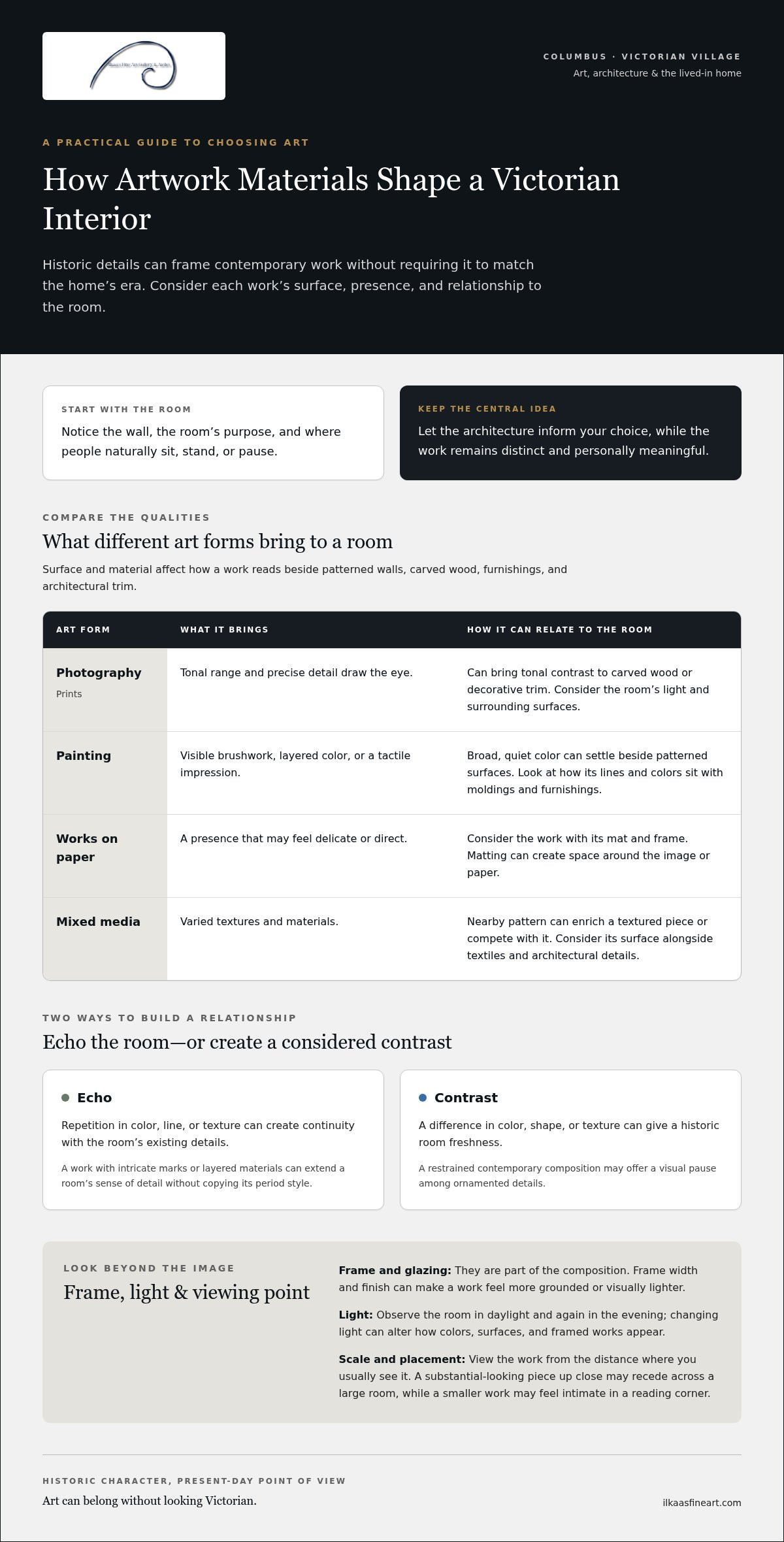
In a Victorian room, artwork meets an interior already rich with line and detail. A painting with broad, quiet color can settle beside patterned surfaces; a fine art photograph may bring tonal contrast to carved wood or decorative trim. Repetition can create continuity, while a difference in color, shape, or texture can give the room freshness. The goal isn’t to make every element agree, but to let each remain clear.
A work’s material and scale affect how it reads in a room. A modest work with a visually dense surface may hold attention differently from a larger piece with open space. Consider how its lines relate to the moldings, how its colors sit beside furnishings, and how light falls across its surface during the day. Complementing the artwork with elevated furnishings from Benjamin & Maxwell creates a balanced dialogue between the room's historic framework and contemporary living.
Choosing Art by Material, Surface, and Presence
Photographic prints, paintings, and works on paper each bring a distinct surface and presence. A photograph can draw the eye through tonal range and precise detail. A painting may bring visible brushwork, layered color, or a tactile impression. Works on paper can feel delicate or direct, while mixed media introduces varied textures and materials. These qualities shape how a work relates to polished furniture, woven textiles, painted walls, and ornate architectural details.
Notice the room’s light and surrounding surfaces before choosing. A bright wall may make a work’s color feel more vivid; nearby pattern can enrich a textured piece or compete with it. The Victorian Village Handbook offers local context for residents thinking about the character of neighborhood homes. For the artwork itself, consider how its material and surface will look in the specific room.
Contrast, Continuity, and the Artwork’s Frame
A contemporary work can feel at ease among historic details when the contrast is deliberate. A restrained abstract composition, for example, may give an ornamented room a visual pause. A work with intricate marks or layered materials can extend the room’s sense of detail without copying its period style.
The frame and glazing are part of the composition, not neutral finishing touches. Frame width and finish can make a work feel more grounded or visually lighter; matting can create space around the image or paper. Look at the complete framed work against the wall and near the furniture, rather than judging the image alone. For a closer look at how fine art photography and other artwork share a setting, explore Ilkaa’s Columbus gallery.
How to Select Art for a Victorian Village Home: A Practical Framework
A clear process makes choosing art less about guessing and more about looking closely. Consider how a room functions, where the work will be seen, and what you want to live with. Color and architectural harmony matter, but so does the feeling a work leaves with you. A piece that holds your attention is a good place to begin.
- 1. Identify the room’s purpose. A room for conversation, quiet reading, or everyday passage will call for different kinds of attention and viewing.
- 2. Locate a viewing point. Notice where you naturally sit, stand, or pause. That position helps determine how the work will be experienced.
- 3. Assess scale. Consider the wall’s width, nearby furniture, and the distance from which you’ll see the artwork.
- 4. Choose a work. Weigh its material, color, and relationship to the room’s details alongside your personal response.
- 5. Test placement. Temporarily mark the work’s intended footprint, then view it from the main vantage point and along the room’s usual path.
Matching Artwork Scale to Wall and Viewing Distance
Scale is a relationship, not a fixed measurement. A work above furniture may need enough visual presence to hold its own, while a smaller piece can feel intentional on a narrower stretch of wall. Before committing, use paper or another temporary marker to map the artwork’s full footprint, including its frame. Step back to the usual viewing position and check how it balances with the furniture and surrounding details.
Building a Personal Mix of Images and Art Forms
Start with a work that feels meaningful or continues to reward your attention. Photographic art can sit alongside paintings, works on paper, or mixed media. Shared tones, subject matter, or material qualities create continuity without making the works identical. Art and design have long been connected; the Victoria and Albert Museum describes its founding purpose as helping to educate designers, manufacturers and the public in art and design.
A home’s collection can take shape over time, so there’s no need to resolve every wall at once. To consider fine art photography alongside other forms, explore the Columbus gallery collection and notice which materials, images, and moods appeal to you.
Where and How to Display Art in a Historic Columbus Home
Placement begins with how a room is seen and used. A focal wall can give a single work clear presence, while a transition space offers a more intimate encounter as you move between rooms. A group of works can create rhythm along a longer wall, provided the architecture and circulation remain legible. Each option serves a different viewing purpose.
Choosing a Wall by Sightline and Daily Use
Notice where you naturally pause, sit, enter, or look across the room. A wall facing a favorite chair may invite sustained attention; one visible from the doorway can offer a first impression. If a mantel or another architectural detail already anchors the room, artwork nearby can support that focus without competing with it. Consider the work from near and distant viewpoints, and check that furniture or a busy passage won’t interrupt the view.
A simple room sketch or photograph can help you compare options. Mark doors, windows, furniture, and the strongest architectural features, then indicate possible artwork locations. This makes it easier to see whether a piece feels connected to the room or interrupts its natural movement. There’s no single hanging-height formula for every room; the right position depends on the work, the wall, and how you encounter it.
Arranging One Work or Several Together
A single work can hold attention through its scale, color, or subject. A grouping creates a different effect: repeated frames, related tones, or varied forms can establish visual rhythm. Before arranging several works, sketch their outlines on paper and adjust spacing and alignment there. Look at the group as a whole, then consider whether each piece still has enough presence to be seen individually.
For a photographic work, consider how its printed surface and tonal qualities read from the room’s main viewing point. Explore the Columbus fine art photography gallery to see photographic art presented alongside other forms of fine art. That can help clarify whether you want one strong focal work, a quieter piece in a passage, or a considered grouping.
Plan a visit to Ilkaa’s gallery
Experience Art in a Historic Columbus Setting
Seeing artwork in a historic home can reveal details that are easy to miss in a photograph or on a screen: the texture of a surface, the way a frame meets a wall, or how a work changes as you move through a room. Ilkaa’s Fine Art Gallery & Atelier offers this setting in Columbus, inside the historic Joseph-Cherrington House at 785 East Broad Street.
The house is a local point of reference for considering how art and historic interiors can share space. It isn’t a Victorian Village property, and no single historic building can stand in for every home in the neighborhood. Still, viewing art in a home-like setting can prompt useful questions: How does a work sit beside architectural detail? What does its material contribute? Does it draw you in from across the room or invite a closer look?
A Historic House as a Setting for Looking at Art
Ilkaa’s presents fine art photography alongside paintings, works on paper, mixed media, and small-scale sculpture. Moving between these forms makes it possible to notice differences in surface, form, and presence. The gallery’s intentional, unhurried atmosphere leaves room to consider a piece’s craft and history, as well as your own response to it.
Those observations can inform decorating a Victorian Village home with art, but the gallery isn’t a formula for arranging every historic interior. Each home has its own proportions, architectural features, light, and routines. Use a visit to look attentively, then carry that habit of observation back to your own rooms.
Continue Exploring Art in Columbus
Give yourself time with the work. Notice what holds your attention, what you want to see again, and which materials or images feel meaningful beyond a first impression. You don’t need specialist knowledge or a finished plan. Looking slowly is a useful beginning, whether you’re choosing one piece or imagining how a collection might develop.
For practical information before visiting, see gallery visit details. To explore photographic work and its place within the gallery, browse the Columbus fine art photography gallery. Let the works that stay with you guide what you look for next.
Let Your Home’s Story Continue Through Art
A thoughtful approach to decorating a Victorian Village home with art begins with observation. Let original details inform the composition, consider how scale and materials read in the room, and choose work that holds personal meaning. Then use the home’s sightlines and daily rhythms to guide placement, rather than relying on a fixed period style.
An art collection doesn’t have to arrive all at once. It can develop gradually, with each work adding a new note to the conversation between architecture and the people who live there. In Columbus, Ilkaa’s Fine Art Gallery & Atelier offers a chance to experience that conversation in the historic Joseph-Cherrington House at 785 East Broad Street. Its collection spans fine art photography, paintings, works on paper, mixed media, and small-scale sculpture.
Look at your rooms with fresh attention and give yourself time to notice which works continue to resonate. To see art in a historic Columbus setting, plan a visit to Ilkaa’s Fine Art Gallery & Atelier.
Frequently Asked Questions
How do you decorate a Victorian Village home with art?
Begin with the home’s existing character, the room’s purpose, and the places where you naturally pause or look. Choose art for its personal meaning as well as its relationship to the room’s scale, materials, and light. Historic character doesn’t require a period-perfect interior. Before hanging a piece, test its placement from different viewpoints. Let your collection develop gradually, adding work as you find pieces that feel right for your home.
Can contemporary art work in a Victorian home?
Yes. Contemporary art can feel at home in a historic interior when its relationship to the room is considered. Scale, surface, color, and framing can create continuity with architectural details or offer a deliberate contrast. The artwork doesn’t need to imitate the house. Let both retain their distinct character, then consider how their forms and materials contribute to a coherent room that reflects the people who live there.
What kind of art looks good in a Victorian house?
There’s no single required style. Photographic works, paintings, works on paper, and mixed media can all suit a Victorian home, depending on the room and the people who live there. Consider the work’s material, scale, subject, and emotional resonance alongside its relationship to the architecture. Choosing art solely to match a historical period can narrow your options; a personal connection can be just as meaningful in shaping the room.
How do you choose the right size art for a wall?
Consider the usable wall area, nearby furniture, viewing distance, and the room’s main sightline. A work should feel intentional in its setting, rather than chosen by a universal measurement formula. To compare possibilities, map the artwork’s footprint with paper or review a room photograph that includes the wall and furnishings. Then look from the places where you’ll usually sit, stand, or enter. The right scale depends on the specific room.
Should art match the period of a Victorian home?
No. A historic home can hold artwork from different periods and styles. Respecting its architectural character is not the same as recreating a period interior. Look for connections through material, tone, scale, or personal meaning, while allowing some works to introduce contrast and a contemporary point of view. A considered mix can honor the home’s details without making every object appear to belong to the same era.
Where can I see fine art in a historic Columbus setting?
Ilkaa’s Fine Art Gallery & Atelier is located in the historic Joseph-Cherrington House at 785 East Broad Street in Columbus, Ohio. Its collection includes fine art photography alongside paintings, works on paper, mixed media, and small-scale sculpture. Visitors from Columbus and nearby communities, including Dublin, Bexley, Upper Arlington, New Albany, Powell, Worthington, Westerville, and Delaware, can find practical details on the gallery’s visit information page.
Disclaimer
Information is provided for general editorial and educational purposes. Artwork availability, pricing, dimensions, framing, edition details, exhibition information, and event schedules are subject to change. Please contact Ilkaa’s Fine Art Gallery & Atelier for the most current information.
© 2026 Ilkaa’s Fine Art Gallery & Atelier. Article text, gallery photographs, graphics, and other original gallery content may not be copied, reproduced, republished, distributed, modified, or used for commercial purposes without prior written permission. Copyright in individual artworks, artist photographs, and other third-party materials remains with the respective artists, photographers, estates, or rights holders. Brief quotations and links may be used with appropriate attribution where permitted by law.