
A photograph's value isn't found in the image alone, but in the physical integrity of the print itself. The ease of digital production has made imagery more accessible than ever, yet it has also made the search for authentic, museum-grade work more difficult. If you've spent time looking for fine art photography for sale in Columbus, Ohio, you've likely encountered a sea of mass-market reproductions that lack the depth and archival longevity required for a serious collection. It's a common challenge for those who value craftsmanship over convenience.
You deserve an art-buying experience that's as intentional as the work hanging on the walls. This guide simplifies the process of identifying investment-quality pieces, from understanding silver gelatin processes to the importance of restricted-quantity editions. We'll examine how to evaluate archival standards and what to expect when visiting a professional atelier. By the end, you'll have the knowledge to build a portfolio that reflects both your personal taste and a commitment to artistic legacy.
Key Takeaways
- Distinguish between decorative imagery and intentional fine art by focusing on technical mastery and the shift toward sophisticated medium-format film works.
- Identify the technical standards of archival pigment prints and how limited edition numbering protects the scarcity and value of fine art photography for sale in Columbus Ohio.
- Evaluate a gallery's roster by comparing local perspectives with international standards to ensure your collection maintains a professional-grade aesthetic.
- Follow a structured acquisition process that includes defining your aesthetic goals and researching an artist's market history and exhibition record.
- Experience the physical importance of material and atmosphere by visiting an intimate atelier environment within a historic Columbus landmark.
Defining Fine Art Photography for the Columbus Collector
Fine art photography is a deliberate act of creation rather than a casual capture of a moment. While commercial photography serves a specific utility or documents a familiar landmark, fine art begins with the artist's internal vision. To understand What is Fine Art Photography? one must look at the intentionality behind the lens. It's the difference between a decorative print of a skyline and a curated study of light and texture captured on a large-format negative. The value lies in the artist's intent, the technical execution, and the physical permanence of the final print.
The physical medium is the foundation of this value. In an era of infinite digital files, the tangible print becomes a rare object of craft. When collectors seek fine art photography for sale in Columbus Ohio, they are often looking for the depth and tonal range that only traditional film processes can provide. The choice of paper, the chemistry of the darkroom, and the precision of the archival pigment process are not mere technicalities; you can find out more about how these standards define a premium print collection. They are the essential elements that transform an image into a lasting piece of art.
Fine Art vs. Commercial Photography
The atelier approach treats the photographic process with the same reverence as classical painting. Technical mastery in large-format film photography requires a slow, methodical pace that digital equivalents rarely match. This dedication to craft defines the art of living with great photography. It's about more than just aesthetics; it's about the presence of the work in a room. Curation serves as the final filter. It ensures that each piece contributes to a cohesive narrative within a home or professional space, moving beyond simple decoration into the realm of intentional collection.
The Evolution of the Columbus Art Scene in 2026
The local landscape is maturing. While the Short North remains a central cultural hub, 2026 marks a distinct move toward more intimate, private atelier spaces. Collectors now seek experiences that match the depth of the work they acquire. Historic architecture, such as the Joseph-Cherrington House, provides a dignified backdrop for viewing contemporary works. This environment allows the viewer to appreciate the tactile quality of a silver gelatin print or a large-scale archival work without the distractions of a high-traffic retail setting. It's a shift toward a more contemplative and personal relationship with art.
The gallery functions as a vital bridge in this evolving ecosystem. It is not merely a showroom but a space for education and discovery. A curator translates the artist's technical choices into a language that resonates with the collector's goals. This relationship ensures that the act of collecting remains accessible and grounded in a shared appreciation for craftsmanship and history. Whether you are a seasoned investor or a first-time buyer, the gallery provides the context necessary to understand why a specific work deserves a place in your life.
Archival Quality and the Value of Limited Edition Prints
A collector isn't just buying an image; they are buying a physical object meant to outlast a lifetime. When browsing fine art photography for sale in Columbus Ohio, the technical data behind the print is just as vital as the composition itself. Serious acquisition requires a shift in focus from the subject matter to the material integrity of the medium. The difference between a decorative poster and a gallery-grade print lies in the chemistry of the ink and the archival nature of the substrate.
Understanding Archival Pigment Standards
Museum-grade pigment prints utilize mineral-based inks that resist fading far longer than the dye-based inks found in standard reproductions. These pigments bond with 100% cotton rag or alpha-cellulose papers that are entirely acid-free and pH-neutral. To meet the highest professional benchmarks, a print must adhere to ISO 9706, which specifies the requirements for permanence by setting strict limits on oxidation and paper composition. This ensures the work remains vibrant for centuries when kept in stable conditions. Standard giclee prints often lack these rigorous certifications, making them unsuitable for long-term investment portfolios unless produced by a specialized studio like imagetecphoto.com that focuses on archival excellence.
The Mechanics of Limited Editions
Scarcity is the engine of value in the art market. A limited edition print is restricted to a pre-determined number of copies, after which the negative or digital file is retired. The scale of the edition directly impacts market price. An edition of 10 carries a higher level of exclusivity and higher price point than an edition of 100. Within these runs, you may also encounter Artist Proofs, or APs. These were traditionally the first prints used by the artist to verify color and detail; today, they remain highly sought after for their rarity and direct connection to the creator's proofing process.
Numbered prints maintain higher resale value because their provenance is traceable. A clear numbering system, such as "3/15," provides the collector with a guarantee that the market won't be flooded with open-edition copies. This transparency transforms a beautiful photograph into a tangible asset. Every acquisition should be accompanied by a signed Certificate of Authenticity. This document serves as the legal pedigree of the work, verifying the artist's signature, the edition number, and the specific materials used. For serious collectors, these standards are non-negotiable. They protect the integrity of the portfolio and ensure the work's historical value. If you're beginning your journey, you can view available limited edition works to see how these standards are applied in a professional gallery setting.
Navigating Columbus Art Galleries: A Focused Approach
The digital gallery is a convenient tool for research, but it cannot replace the physical encounter with a print. Texture, the subtle play of light on a silver gelatin surface, and the true scale of a work are lost on a screen. When searching for fine art photography for sale in Columbus Ohio, visiting a physical space is the only way to verify the craft discussed in previous sections. A professional exhibition should feel intentional; the lighting, the spacing between works, and the choice of mounting all signal the gallery's respect for the artist’s vision.
A sophisticated gallery roster acts as a bridge between local talent and international standards. While many spaces focus exclusively on regional subject matter, a curated atelier brings global technical proficiency to the local market. Look for galleries that feature artists like Roman Loranc or Millie Franz, whose work demonstrates a mastery of the medium that transcends geographic boundaries. This balance ensures that your collection remains relevant within a broader art historical context.
The Short North vs. Private Ateliers
Columbus offers two distinct art-viewing experiences. The Short North is synonymous with the Gallery Hop, a vibrant social event perfect for discovery and community engagement. However, the energy of a street-level storefront can sometimes distract from the contemplative nature of fine art. In 2026, the trend has shifted toward private atelier environments, often situated within historic landmarks like the Joseph-Cherrington House. These quiet, residential-scale spaces allow for an intimate dialogue with the work, making them the preferred choice for serious acquisition and portfolio building.
Questions to Ask Your Gallery Director
A transparent relationship with a curator is the collector's best asset. Don't hesitate to ask specific questions regarding the physical life of the work. A professional director should be able to provide detailed information on several key points:
- Provenance and Process: Where was the print produced, and what specific archival standards were followed?
- Framing Standards: Is the work mounted using acid-free materials and UV-protective glazing to prevent environmental damage?
- Art Advisory: Does the gallery offer guidance on how a new acquisition fits into your existing collection or future investment goals?
These inquiries ensure that your purchase is backed by technical expertise. While photography is a primary focus in many of these spaces, a well-rounded Columbus art gallery will also offer contemporary paintings, works on paper, and small-scale sculpture. This breadth allows you to build a diverse collection under the guidance of a single, trusted curator.
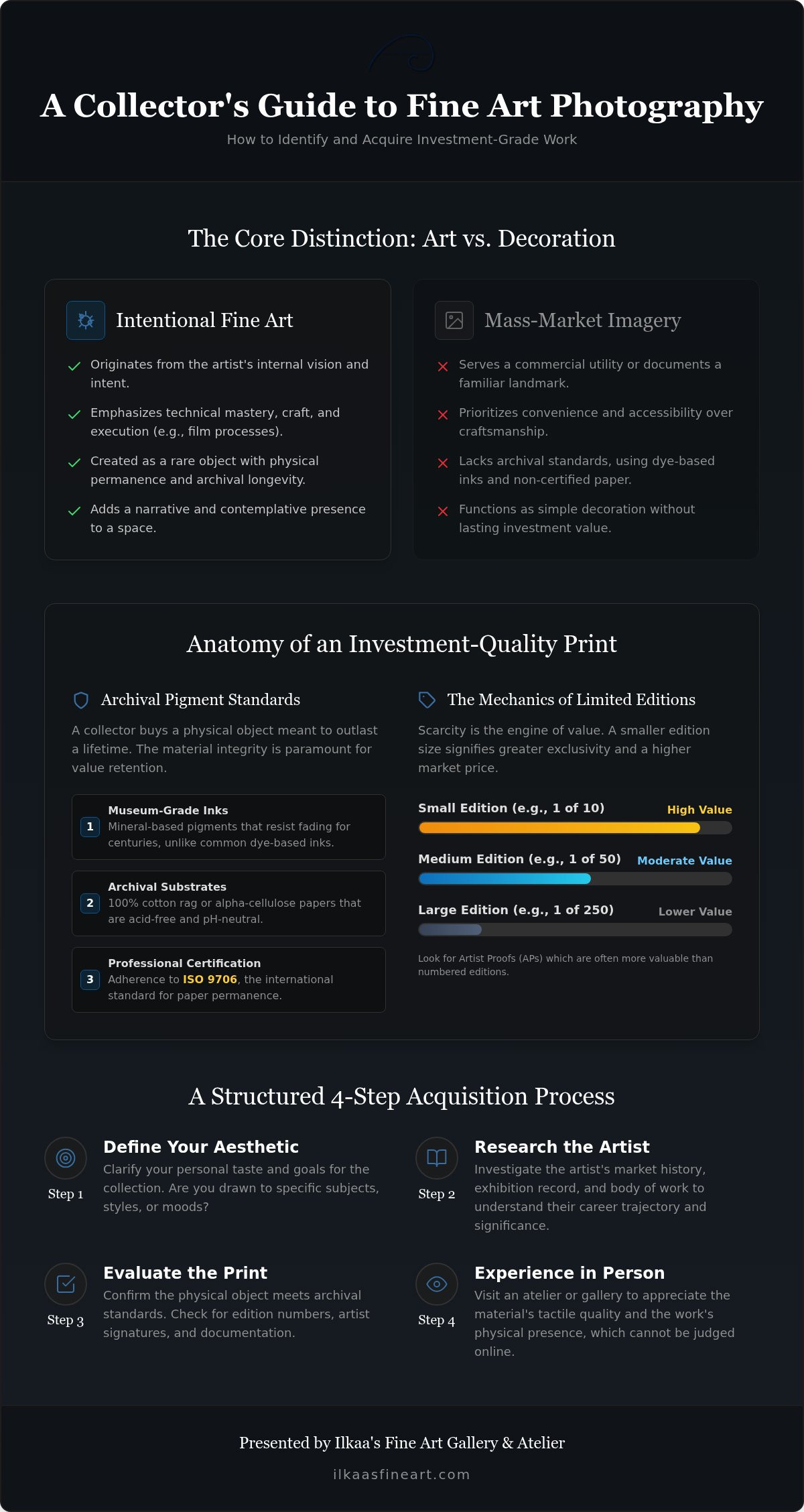
How to Acquire and Curate Investment-Grade Photography
Acquiring a significant work of art is a process of discernment that begins long before the piece is hung. When evaluating fine art photography for sale in Columbus Ohio, the collector must look beyond the visual appeal to the artist's historical trajectory. The journey from enthusiast to collector involves a series of intentional steps designed to protect the integrity of your portfolio. It's about moving from a reactive purchase to a proactive strategy of acquisition.
The following framework ensures your collection maintains its value and relevance:
- Define your goals: Determine if your focus is on personal heritage, architectural harmony, or market value.
- Research market history: Examine the artist's exhibition record and presence in permanent museum collections.
- Verify specifications: Confirm the work meets the archival standards discussed earlier, including the use of acid-free substrates and pigment-based inks.
- Consult an expert: Engage with a gallery director to understand how a specific piece fits into the broader context of contemporary art.
- Document the acquisition: Maintain a file containing the Certificate of Authenticity, purchase receipts, and high-resolution images for insurance and heritage purposes.
The Role of Professional Art Advisory
Building a cohesive collection requires more than just an eye for beauty. Professional art advisory helps you align your acquisitions with the specific architectural requirements of your space. Whether you're selecting pieces for a private residence or a corporate environment, an advisor can source rare works from archival collections that are not always on public display. This service ensures that every piece in your portfolio contributes to a unified narrative, reflecting a sophisticated level of curation that is difficult to achieve alone.
Caring for Your Photographic Investment
Preservation is an active responsibility. Even the highest quality archival pigment prints are susceptible to environmental damage if not handled with care. Best practices include using museum-grade matting and UV-protective glazing to shield the work from light exposure. Environmental control is vital for print longevity because fluctuations in humidity and temperature can cause paper fibers to expand and contract, leading to irreversible structural damage. By maintaining a stable environment, you ensure the work remains in pristine condition for future generations.
If you are ready to begin or expand your collection with professional guidance, you can schedule a private art consultation to discuss your specific goals and view available works in person.
Experience the Atelier: Ilkaa’s Fine Art Gallery & Atelier
The physical environment where art is viewed shapes the collector's understanding of the work. At Ilkaa’s Fine Art Gallery & Atelier, this experience is hosted within the historic Joseph-Cherrington House. This Columbus landmark provides a dignified, residential context that allows for a quiet study of light and form. It's a space where the architecture of the past meets the technical precision of the present. By stepping away from high-traffic commercial districts, the gallery offers the sanctuary necessary to appreciate museum-grade fine art photography for sale in Columbus Ohio.
The roster is a deliberate blend of local vision and international mastery. Founders Ilkaa Amalia and Millie Franz have curated a selection that emphasizes the tactile beauty of traditional film. You'll find the evocative, high-contrast silver gelatin prints of Roman Loranc alongside the nuanced, contemplative works of Millie Franz. Each artist represented in the gallery shares a commitment to the "Atelier" philosophy, where the craft of the print is as significant as the composition of the image.
A Curated Perspective in Columbus
The gallery operates on a rhythm that favors depth over volume. This slow, deliberate approach to art appreciation is a core tenet of the brand's vision. By focusing on medium and large format film, the atelier acts as a guardian of artistic integrity. These traditional methods require a level of patience and technical mastery that digital processes often bypass. The result is a collection of works with a physical presence and tonal range that must be seen in person to be fully understood. The Atelier Collection specifically sources unique and rare photographic works, ensuring that collectors have access to pieces that are not available in open-market settings.
Your Next Steps in Collecting
Building a professional-grade portfolio begins with a single, informed acquisition. Whether you're a seasoned collector or a serious enthusiast, the gallery provides the resources to help you make a confident choice. The following steps will help you engage with the collection:
- Visit the Gallery: Schedule a private viewing to experience the work in the intimate, contemplative setting of the Joseph-Cherrington House.
- Explore the Digital Collection: For those who prefer to begin their research remotely, the online platform offers a curated look at limited edition acquisitions and archival pigment prints.
- Request Advisory Services: Contact the gallery for professional art consultation. This service is essential for those looking to build a cohesive collection for private residences or corporate environments.
The act of collecting is a personal journey, yet it's one that benefits from the guidance of a knowledgeable curator. By focusing on archival standards and the historical significance of the medium, Ilkaa’s Fine Art Gallery & Atelier ensures that every piece you acquire is a lasting investment in craftsmanship. If you're looking for fine art photography for sale in Columbus Ohio that meets global museum standards, we invite you to begin the conversation today.
Cultivating Your Photographic Legacy
Collecting art is a deliberate act of preservation. By prioritizing museum-grade archival standards and restricted limited editions, you ensure your portfolio remains a tangible asset for decades. The search for fine art photography for sale in Columbus Ohio often begins with a single image, but it matures through a deep understanding of craft and provenance. Whether you are drawn to the timeless texture of silver gelatin or the technical precision of archival pigment, the physical integrity of the work defines its ultimate value.
Ilkaa’s Fine Art Gallery & Atelier provides the specialized context necessary for this journey. Expert curation by Ilkaa Amalia, paired with the quiet atmosphere of the historic Joseph-Cherrington House, transforms the acquisition process into a meaningful experience. You're invited to explore our curated collection of limited edition prints and discover work that resonates with your personal aesthetic. Building a professional-grade collection is a rewarding pursuit that starts with a commitment to high-level craftsmanship.
Frequently Asked Questions
Where can I buy signed fine art photography prints in Columbus, Ohio?
Ilkaa’s Fine Art Gallery & Atelier specializes in signed, museum-grade fine art photography for sale in Columbus Ohio. Located in the historic Joseph-Cherrington House, the gallery features limited edition works from renowned artists like Roman Loranc and Millie Franz. Every acquisition includes a signed certificate of authenticity to ensure the work's provenance and historical value.
What makes a photograph 'investment grade' for a collector?
Investment-grade photography is defined by a combination of the artist's market history and the print's physical longevity. The work must be produced using archival pigment or silver gelatin processes on acid-free, pH-neutral substrates that meet ISO 9706 standards. Scarcity is also a primary factor; restricted edition sizes ensure the work remains a tangible asset rather than a mass-market reproduction.
Are limited edition photography prints a good investment in 2026?
Limited edition prints remain a stable asset class in 2026 because they provide guaranteed scarcity in an increasingly digital world. As an artist's exhibition record and reputation grow, the restricted number of available prints often leads to appreciation in the secondary market. Collectors should prioritize low edition numbers and verified archival production to protect their long-term investment value.
How do I verify the authenticity of a fine art print?
Authenticity is verified through a formal Certificate of Authenticity provided by the gallery at the time of purchase. This document should detail the specific edition number, the date of production, and the archival materials used. A physical signature or stamp from the artist further validates the work's pedigree, making it a traceable and secure addition to a professional art portfolio.
What is the difference between a giclee print and an archival pigment print?
Archival pigment prints use mineral-based pigments that offer superior fade resistance compared to the dye-based inks often found in standard giclee reproductions. These pigments bond with 100% cotton rag papers that don't yellow or degrade over time. This combination ensures the work maintains its visual integrity for centuries, whereas standard prints may begin to show signs of oxidation within decades.
Can I get professional art advisory services in Columbus?
Ilkaa’s Fine Art Gallery & Atelier provides art consultation and advisory services for both private residences and corporate environments. This process helps collectors align their acquisitions with their aesthetic goals and architectural requirements. Whether you're a first-time buyer or a seasoned investor, professional advisory ensures your collection is curated with a cohesive narrative and technical precision.
Why is the Joseph-Cherrington House significant for art collectors?
The Joseph-Cherrington House offers a contemplative, residential-scale environment that allows collectors to experience art in a quiet, intimate setting. This historic landmark provides a dignified backdrop that mirrors the craftsmanship of the works on display. By visiting this atelier, you can appreciate the tactile quality of medium-format film and small-scale sculpture away from the distractions of high-traffic commercial districts.
How should I frame museum-quality photography for my home?
Museum-quality framing requires the use of acid-free, 100% cotton rag matboards and UV-protective glazing to prevent light damage. It's essential to use reversible mounting techniques that don't permanently alter the print's structure. This level of protection shields your fine art photography for sale in Columbus Ohio from environmental hazards, ensuring the work remains in pristine condition for future generations.
Disclaimer
Information is provided for general editorial and educational purposes. Artwork availability, pricing, dimensions, framing, edition details, exhibition information, and event schedules are subject to change. Please contact Ilkaa’s Fine Art Gallery & Atelier for the most current information.
© 2026 Ilkaa’s Fine Art Gallery & Atelier. Article text, gallery photographs, graphics, and other original gallery content may not be copied, reproduced, republished, distributed, modified, or used for commercial purposes without prior written permission. Copyright in individual artworks, artist photographs, and other third-party materials remains with the respective artists, photographers, estates, or rights holders. Brief quotations and links may be used with appropriate attribution where permitted by law.