
What if your portfolio is not a historical record of your past, but a silent, deliberate manifesto of your artistic future? For many photographers, the challenge of how to start an art portfolio lies in the tension between a vast, varied body of work and the need for a singular, disciplined narrative. You likely feel the uncertainty of choosing between digital accessibility and the quiet authority of a physical, archival presentation. It's a common hesitation, yet with 51% of galleries prioritizing emerging artists in 2026, the demand for a refined, cohesive voice is vital.
This guide offers a structured path to curating a professional-grade portfolio that honors both your creative vision and the strict standards of archival integrity. You'll discover how to select a focused sequence of images that resonate with collectors and curators alike. We will examine the essential elements of museum-grade presentation, ensuring your work possesses the technical mastery and historical longevity required for the most discerning environments.
Key Takeaways
- Learn how to start an art portfolio by distinguishing your comprehensive archive from a curated narrative that reflects a singular artistic intent.
- Master the curation process through a rigorous technical audit to ensure every selected piece exhibits the highest standards of light and composition.
- Understand the necessity of archival integrity and why museum-grade pigment prints are essential for establishing investment-grade value.
- Discover the principles of minimalist layout, utilizing generous white space to create a "quiet exhibition" experience within your presentation.
- Gain the confidence to approach curators by adopting the proper etiquette for gallery engagement and professional evolution.
Defining the Fine Art Portfolio: More Than a Collection
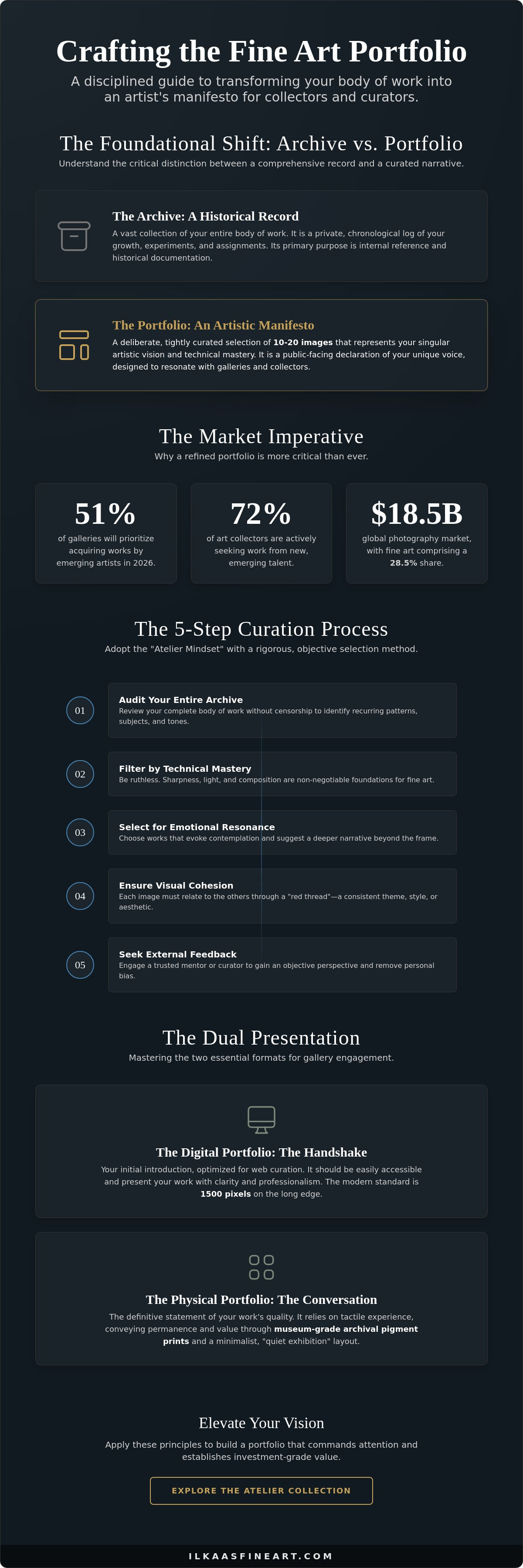
A fine art portfolio is a deliberate act of exclusion. It isn't a gallery of everything you've ever captured; it's a silent manifesto of your artistic intent. When considering how to start an art portfolio, many photographers mistake a chronological archive for a curated body of work. An archive is a historical record of your growth. A portfolio, however, is a distilled essence of your technical mastery and thematic consistency. In a global photography market valued at $18.5 billion, where fine art photography holds a 28.5% share, intentionality is your most valuable currency.
Understanding the foundational question of What is an artist's portfolio? requires looking beyond simple image storage. It is a bridge between your private atelier and the public gallery. This bridge exists in two primary forms. The digital portfolio serves as a sophisticated handshake, optimized for the 1500-pixel standards of modern web curation. The physical portfolio is the conversation itself. It relies on tactile quality and archival pigment prints to convey a sense of permanence that a screen cannot replicate. Both must work in tandem to present a unified narrative to the 72% of collectors who are actively seeking work from emerging artists.
The Purpose of a Curation-First Approach
In high-end gallery contexts, less is always more. A curation-first approach adopts the "Atelier" mindset, valuing the integrity of the process as much as the final frame. Curators aren't looking for variety; they're looking for a specific, unwavering voice. By limiting your selection to 10-20 exceptional images, you build immediate trust with serious collectors. This restraint proves you possess the critical eye necessary to judge your own work by museum standards. A tight edit ensures that no single image dilutes the impact of the collection.
Identifying Your Core Artistic Narrative
Every successful portfolio possesses a "red thread," a subtle thematic or aesthetic consistency that binds disparate series together. This might be a recurring study of light, a specific textural quality, or a contemplative approach to time. To find yours, try to define your current focus in a single, declarative sentence. This clarity helps you differentiate between your commercial output and your fine art pursuits. While commercial work demonstrates skill, fine art demonstrates vision. Collectors invest in the vision, seeking the unique perspective that only your specific history and technique can provide.
The Curation Process: Selecting Your Most Resonant Works
Curation is the soul of the fine art medium. When you begin the journey of how to start an art portfolio, you must first detach from the sentimentality of the moment the shutter was pressed. A successful portfolio requires a ruthless eye and a commitment to the "Atelier" mindset. This process isn't about showing what you can do; it's about revealing who you are as an artist. Research indicates that a professional portfolio in 2026 should consist of a tightly curated selection of 10-20 images. Any more risks diluting your narrative; any less may feel incomplete.
- Step 1: Audit your entire body of work. Review your archives without self-censorship. Look for patterns in subject matter and tone.
- Step 2: Filter by technical mastery. Sharpness, light, and composition are non-negotiable. If an image fails technically, it cannot be saved by its story.
- Step 3: Select for emotional resonance. Choose works that evoke a contemplative response or suggest a deeper narrative depth.
- Step 4: Ensure visual cohesion. Every piece must exist in conversation with its neighbor, linked by a "red thread" of style or theme.
- Step 5: Seek external feedback. A curator’s perspective helps remove the personal bias that often clouds an artist's judgment.
Technical Mastery vs. Emotional Impact
A technically flawless image can remain hollow if it lacks a soul. In the fine art context, a slight blur or a deep, grainy shadow often carries more weight than clinical sharpness. Selection should favor texture and the quiet passage of time. To maintain museum-quality archival standards, every piece chosen must eventually translate into a physical medium that preserves these nuances. Balancing rare archival shots with contemporary works creates a sense of legacy. Those looking to see how these standards manifest in a finished collection might explore The Atelier Collection for inspiration.
Structuring the Sequence
The sequence is a silent exhibition. It begins with the "Anchor" piece. This is your strongest statement, a visual invitation that sets the tone for the viewer. Create a visual rhythm through contrast and generous white space, allowing the subject matter to breathe. This measured pace invites the reader to linger and reflect, mirroring the experience of walking through a quiet gallery. End on an evocative note. The final image shouldn't provide a definitive conclusion; it should invite a lingering conversation and leave the collector wanting to see more.
Archival Integrity: Elevating Your Portfolio to Museum Standards
A fine art portfolio is more than a sequence of visions; it is a collection of physical objects intended to outlive their creator. When you consider how to start an art portfolio, the conversation must shift from pixels to pigment. Archival integrity represents the threshold between a casual collection and a professional legacy. For the collector, the physical medium is as important as the image itself. It signifies that the work is investment-grade, possessing a permanence that justifies its place in a private or institutional collection.
The distinction between standard inkjet prints and archival pigment prints is fundamental. Standard prints often rely on water-based dyes that are susceptible to fading and environmental degradation. In contrast, archival pigment prints utilize mineral-based particles that sit on the surface of the paper. This creates a depth of tone and a level of lightfastness that dyes cannot replicate. Selecting museum-grade papers is an extension of the artistic process. The weight, tooth, and acidity of the substrate influence how light interacts with the image, reflecting the specific texture and atmosphere of your work.
The Science of Museum-Grade Photography
The longevity of your work depends on the chemistry of the materials used. Pigment-based inks are the gold standard for preservation, ensuring that delicate gradients and deep blacks remain stable for over a century. The Longevity of Pigment Prints allows an artist to offer a promise of endurance to their audience. Paper choice is never merely a technical detail. Whether you select a smooth cotton rag or a heavy baryta, the choice defines the tactile reality of the "Atelier" experience. Acid-free, pH-neutral papers prevent the yellowing and brittleness that plague lesser materials.
Limited Editions and Rarity
Rarity is a primary driver of value in the fine art market. When structuring your portfolio, you must decide how your work will be editioned. What is a Limited Edition Print? It is a formal commitment that only a predetermined number of physical objects will ever exist. This scarcity creates prestige and protects the investment of the collector. A professional portfolio includes the following standards for numbered works:
- Certificates of Authenticity: These documents establish provenance and verify the print's origin, edition number, and technical specifications.
- Edition Consistency: Ensuring that each print in a series meets the exact same archival standards.
- Signature and Numbering: The physical mark of the artist, traditionally placed in the margin or on the reverse, to confirm its place within the Atelier Collection.
By adhering to these rigorous standards, you transform your portfolio from a simple presentation into a curated selection of rare, historical artifacts. This level of detail builds the necessary confidence for curators and collectors to engage with your work on a professional level.
Presentation and Layout: Crafting the Visual Narrative
The physical arrangement of your work is a silent performance. When mastering how to start an art portfolio, you aren't just selecting images; you are designing a quiet exhibition experience. The choice between a physical portfolio box and a bound book is a choice of intimacy. A box allows for the individual handling of archival pigment prints, inviting the viewer to engage with the weight and texture of each sheet. A bound book offers a controlled, linear sequence. For a professional presentation in 2026, the established structure begins with a minimalist cover page featuring only your name and the year, followed by an artist statement, biography, and CV, before revealing the artwork itself.
Physical prints remain the gold standard for serious curation. While an 8.5x11 inch portfolio print may cost approximately $30, its value lies in its tactile presence. This physical object creates a bridge between the creator and the collector that a screen cannot replicate. A well-ordered portfolio is a methodical journey, moving from broad thematic concepts to specific artistic focuses with a sense of calm and order. This measured pace invites the reader to linger and reflect, mirroring the experience of walking through a quiet gallery space.
The Minimalist Aesthetic
Complexity is the enemy of contemplation. In a fine art context, generous white space and wide, minimalist margins are essential. They act as a visual buffer, separating the art from the distractions of the room. Avoid over-explaining your work with long captions. Instead, utilize descriptive fragments and high-register vocabulary that evoke the atmosphere of the piece. A single word, such as "Ephemeral" or "Nocturnal," often carries more weight than a paragraph of justification. This restrained approach allows the technical mastery of your work to speak for itself without the noise of unnecessary explanation.
Digital Presence for the Modern Curator
While the physical print is the ultimate expression of the craft, digital accessibility remains the primary point of entry for many galleries. Current 2026 standards suggest web portfolios feature images at 1500 pixels on the long edge in the sRGB color space with a 90% JPEG quality. For formal submissions to organizations, higher resolution files between 4 MB and 8 MB at 300 dpi are often required. Serious collectors value exclusivity; providing a password-protected "private viewing" page creates a sense of a private atelier. Ensure your digital metadata includes archival data, reinforcing the investment-grade nature of your work. To see how these principles of presentation elevate a body of work, explore the curated selections within The Atelier Collection.
From Portfolio to Gallery: Engagement and Evolution
A portfolio is never truly finished. It is a living document that breathes and evolves alongside your craft. Once you understand the foundational mechanics of how to start an art portfolio, the focus shifts toward engagement. Your curated selection acts as a formal bridge between the solitude of the studio and the public eye of the collector. In 2026, with 51% of galleries reporting a priority on showcasing emerging artists, the opportunity for representation is significant. However, entry requires more than just talent. It requires an understanding of the delicate etiquette shared between creator and curator.
Approaching a fine art gallery is an exercise in restraint and research. Curators value artists who respect the specific aesthetic and mission of their institution. Before making contact, ensure your work aligns with their current focus. Many professional organizations have strict submission windows, such as the ICONS Exhibition deadline on July 19, 2026, or the PURE ABSTRACTION call ending August 28, 2026. Following these guidelines exactly is the first test of your professional integrity. A well-prepared portfolio demonstrates that you are ready for the rigors of the commercial art market.
Navigating the Columbus Art Environment
The Columbus art scene offers a unique environment for this evolution. Beyond the traditional white-cube spaces, the city is known for its historic house art galleries. These venues provide an intimate, textured backdrop for fine art photography, allowing the work to exist in a domestic, lived-in context. Preparing for events like the Gallery Hop requires a refined, portable version of your narrative. This is often where the first dialogue between artist and advisor begins. Seeking professional art advisory can help you refine your collection, ensuring your work resonates with the specific tastes of local collectors who value both technical mastery and heritage.
The Atelier Experience
The ultimate goal of any portfolio is to facilitate the transition from a private viewing to a public exhibition. The "Atelier" experience invites collectors to see physical prints in an intimate setting, where the nuances of archival pigment prints can be fully appreciated. Here, the portfolio pieces become the basis for limited editions, establishing a sense of rarity and provenance. As your body of work grows, continue to revisit the question of how to start an art portfolio with every new series, ensuring that only your most resonant works remain. This disciplined approach preserves the prestige of your collection and the trust of those who invest in your vision.
Explore building a photography collection with Ilkaa’s Fine Art to see how archival standards and curated narratives define a professional legacy.
Refining the Vision: Your Path to Artistic Legacy
Mastering the discipline of how to start an art portfolio is a transformative process that shifts your focus from individual captures to a unified, enduring narrative. You have explored the necessity of a ruthless curation process and the quiet authority of museum-grade presentation. These standards aren't merely technical hurdles. They are the foundation of trust between the artist and the collector, ensuring that every archival pigment print carries the weight of history and technical mastery.
Whether you are an artist refining your presentation or a discerning collector seeking technical depth, the journey continues within the quiet walls of our atelier. Begin your collection journey at Ilkaa’s Fine Art Gallery & Atelier. Located in the historic Joseph-Cherrington House, our space offers a curated experience led by Ilkaa Amalia and photographer Millie Franz. We specialize in authenticated, museum-grade limited editions that honor the tactile heritage of fine art photography.
Your commitment to the "Atelier" mindset ensures that your work transcends the digital moment. Let your portfolio be the first chapter of a story that remains vibrant for generations to come.
Frequently Asked Questions
What is the ideal number of pieces for a starting art portfolio?
A professional fine art portfolio typically contains 10 to 20 exceptional images. This specific range allows you to demonstrate technical consistency without overwhelming the viewer's attention. A curated selection shows a disciplined, critical eye and ensures that your narrative remains focused and impactful throughout the presentation.
Should I include different styles or stick to one theme?
Focus on a singular, cohesive theme or a clearly defined series. Curators and collectors seek a "red thread" that connects your work through a unified artistic voice. Presenting disparate styles can suggest a lack of intentionality, whereas a thematic focus builds the necessary trust for high-level gallery representation.
How often should I update my photography portfolio?
Update your portfolio annually or upon the completion of a significant new body of work. It is not a chronological archive but a refined manifesto of your current vision. When you reflect on how to start an art portfolio, remember that it must always represent your highest standard of technical and conceptual mastery.
Do I need a physical portfolio in a digital world?
A physical portfolio is essential for serious fine art engagement. While digital platforms offer initial accessibility, the physical print allows a curator to assess the tactile quality and archival integrity of your work. The presence of an archival pigment print conveys a sense of permanence that a screen cannot replicate.
What technical information should I include for each photograph?
Include the title, year of creation, medium, and edition details. Specifically note the use of archival pigment inks and the substrate type, such as a cotton rag or baryta paper. This technical transparency establishes provenance and confirms that the work meets the museum-grade standards required for professional collections.
How do I protect my physical prints in a portfolio box?
Use acid-free, pH-neutral materials and interleave each print with archival glassine or tissue. This prevents surface abrasions and chemical degradation over time. Storing your work in a dedicated, light-tight portfolio box ensures the longevity of the medium and reflects the disciplined standards of a professional atelier environment.
Can I include older work if it still resonates with my current style?
Older work is appropriate if it maintains a thematic or aesthetic connection to your contemporary series. Archival pieces can provide a sense of heritage and show the evolution of your "red thread." However, ensure that any older prints meet your current requirements for archival integrity and technical finish.
What is the difference between a portfolio and an artist statement?
The portfolio is the visual manifestation of your work, while the artist statement provides the conceptual framework. The portfolio displays your technical mastery and vision. The statement explains the intent and philosophy behind the images, helping the viewer understand how to start an art portfolio with a clear, authoritative purpose.
Disclaimer
Information is provided for general editorial and educational purposes. Artwork availability, pricing, dimensions, framing, edition details, exhibition information, and event schedules are subject to change. Please contact Ilkaa’s Fine Art Gallery & Atelier for the most current information.
© 2026 Ilkaa’s Fine Art Gallery & Atelier. Article text, gallery photographs, graphics, and other original gallery content may not be copied, reproduced, republished, distributed, modified, or used for commercial purposes without prior written permission. Copyright in individual artworks, artist photographs, and other third-party materials remains with the respective artists, photographers, estates, or rights holders. Brief quotations and links may be used with appropriate attribution where permitted by law.