
The most profound artistic encounters rarely happen in the middle of a crowded tourist district. While the Short North Arts District remains a vital hub with its 42 year tradition of monthly Gallery Hops, the true heart of the city's creative legacy is often tucked away in quiet ateliers and historic house exhibitions. It's easy to feel overwhelmed by generic recommendations that prioritize foot traffic over technical mastery. You deserve an experience that respects the tactile nature of the medium and the quiet dignity of the artistic process.
Finding local art galleries columbus residents trust for high level craftsmanship requires a discerning eye and a patient approach. Whether you seek the atmospheric depth of contemporary photography or the precision of archival pigment prints, navigating these private spaces shouldn't feel uncertain. This curated guide identifies the most reputable fine art destinations in the city, from the free exhibitions at the Riffe Gallery to exclusive private collections. We will define the distinction between commercial galleries and dedicated fine art spaces, ensuring your next visit is one of quiet reflection and genuine discovery.
Key Takeaways
- Distinguish between commercial storefronts and curated ateliers to identify spaces that prioritize artistic integrity over mass-market appeal.
- Experience the quiet intimacy of local art galleries columbus hosts within historic residential architecture, offering a sensory alternative to traditional white-cube spaces.
- Discover the value of appointment-only galleries and niche neighborhood gems for a more focused encounter with contemporary works.
- Identify the critical archival standards and museum-grade materials that define investment-grade fine art photography.
- Learn how to balance the social energy of public gallery hops with the intentionality and quiet focus of private viewing sessions.
Navigating the Columbus Fine Art Landscape
Columbus has emerged as a sophisticated center for visual expression, moving far beyond its former reputation as a regional trade post. Today, the city offers a refined collection of spaces that cater to the serious enthusiast. Exploring Columbus, Ohio's cultural scene reveals a landscape defined by its quiet diversity. From the polished glass of the downtown core to the weathered brick of historic neighborhoods, the environment serves as a witness to the creative process. This city doesn't just host art; it provides a sanctuary for it.
To understand the local art galleries columbus residents value most, one must recognize the distinction between commercial retail spaces and curated ateliers. Commercial galleries often prioritize accessibility and high-volume foot traffic, particularly during public events. These spaces are vital for the city's energy. In contrast, an atelier or private gallery focuses on the sanctity of the medium. These spaces invite a slower pace. They favor technical mastery and the preservation of artistic legacy over transient trends. This distinction is crucial for the collector seeking a more profound connection with a piece.
The Cultural Evolution of Columbus Art
The city's artistic trajectory began its modern ascent in the early 1980s. This era saw the birth of organized gallery movements that transformed neglected urban corridors into vibrant districts. The presence of the Columbus College of Art and Design (CCAD) provides a constant influx of technical skill and fresh perspective. Recently, the local market has shifted toward more permanent investments. Collectors now seek works that embody longevity, such as investment-grade photography and archival pigment prints that stand the test of time.
Districts of Distinction
While the Short North is well known, the broader network of local art galleries columbus offers spans several distinct neighborhoods. Each district carries its own rhythm and aesthetic focus:
- Short North: The established heart of the scene. It remains the most visible destination for traditional exhibitions and monthly social gatherings.
- Franklinton: A raw, industrial district. It provides a home for experimental creators who utilize large-scale installations and physical mediums.
- The Near East Side: A neighborhood where architectural heritage meets contemporary curation. It's here that one finds the most intimate gallery experiences.
The city's architectural bones provide a unique frame for these works. High ceilings in former warehouses and the intricate woodwork of Victorian homes offer a sense of permanence. This connection between the physical space and the art within it creates a curated experience that feels both grounded and aspirational. It's a landscape that rewards the patient observer who's willing to look beyond the main thoroughfares.
The Historic House Gallery: A Curation of Intimacy
The traditional white-cube gallery model often prioritizes neutrality over character. While clinical spaces have their place, they can feel detached from the lived experience of art. A historic house gallery offers a sophisticated alternative. It replaces sterile fluorescent lighting with the soft, shifting glow of natural windows. It trades echoes for the quiet hum of a residential sanctuary. This environment changes how a viewer interacts with a piece. Within these walls, art isn't just an object on display. It becomes a presence within a home. Among the local art galleries columbus offers, these residential spaces provide a rare sensory impact that grounded architecture and heritage can only achieve together.
Contemplation requires space and silence. In a historic setting, the architectural details, the scent of aged wood, and the intimacy of the rooms encourage a slower pace. This environment is essential for the serious collector. Building a collection is a personal journey. It demands an atmosphere where one can imagine a work living on their own walls. The Greater Columbus Arts Council recognizes the vital role these unique venues play in the city's cultural fabric, bridging the gap between public exhibition and private life.
The Atelier Experience
An atelier represents the intersection of the studio and the gallery. It's a French term for a workshop, a place where the act of creation is never far from the finished result. In a private gallery setting, the atelier model ensures a curated roster of works that meet a singular standard of excellence. Personal attention from a curator in this space isn't a sales tactic. It's a scholarly dialogue. This relationship elevates the acquisition process, transforming it into a partnership based on shared appreciation for technical mastery and artistic legacy.
Case Study: Ilkaa’s Fine Art Gallery & Atelier
Ilkaa’s Fine Art Gallery & Atelier was born from the shared vision of Ilkaa Amalia and Millie Franz. Their goal was to establish a dedicated sanctuary for fine art photography in the heart of Ohio. They chose the historic Joseph-Cherrington House as the gallery’s home for its architectural integrity and timeless atmosphere. This space serves as a guardian of high standards, focusing on museum-grade production and international archival benchmarks. By housing local art galleries columbus enthusiasts can visit by appointment, they maintain the intimacy of a private studio while offering the prestige of a traditional institution. Those seeking to explore this intersection of heritage and craft may browse The Atelier Collection to see how these standards are applied to every piece.
Beyond the Short North: Discovering Niche Spaces
The city's creative geography extends far beyond the neon signs of High Street. While the monthly Gallery Hop on June 6, 2026, offers a vibrant social entry point, the discerning collector often seeks a quieter cadence. Finding local art galleries columbus residents utilize for serious acquisition frequently leads to neighborhoods like Franklinton or the Near East Side. These quieter corridors house appointment-only spaces that prioritize a slow, methodical viewing experience. Visiting during mid-week hours, such as the Tuesday through Friday noon to 5 p.m. window at the Riffe Gallery, provides the silence necessary for true contemplation. This intentionality allows for a deeper connection with the work, away from the distractions of high-traffic commercial events.
Serious art enthusiasts increasingly favor these niche spaces for their specialized focus. When a gallery limits its scope to a specific medium or thematic archive, the level of expertise available to the visitor increases. These environments aren't just storefronts. They're repositories of technical knowledge where the history of the craft is as important as the piece on the wall. For the collector, this means access to a more refined selection of works that meet rigorous standards of excellence and provenance.
Specialized Photography Galleries
Photography has secured its place as a dominant medium in the local market. The shift toward investment-grade work has created a demand for technical transparency. Serious enthusiasts now look for local art galleries columbus that can verify archival standards. Limited Edition Prints and Archival Pigment Prints offer a level of permanence that mass-market reproductions cannot replicate. These works serve as a cornerstone for modern interior design, where the texture of the paper and the depth of the ink become part of the room's architectural identity. The focus remains on the physical medium, celebrating the technical mastery required to produce a museum-quality image.
Contemporary Spaces in Downtown Columbus
Downtown serves as a bridge between the academic and the corporate. Ohio State's Urban Arts Space exemplifies this intersection, offering a venue where research-driven curation meets public accessibility. Nearby, the Ohio Arts Council’s Riffe Gallery presents a rotating schedule of Ohio-based talent, such as the "Shared State" exhibition on view through July 10, 2026. Corporate environments have also embraced this cultural shift. The Hilton Columbus Downtown, for instance, maintains a collection valued at $5 million, showcasing 450 pieces from 128 local artists. This integration of fine art into the professional landscape has spurred a need for private advisory services, helping firms navigate the complexities of curation and archival preservation.
The Collector’s Perspective: Valuing Fine Art Photography
The transition from casual observer to serious collector requires a shift in focus. It's no longer just about the image; it's about the physical object. In the context of local art galleries columbus residents frequent, fine art photography has gained significant ground as a stable asset. A photograph becomes investment grade when its technical execution ensures it will survive for generations. Longevity is not a happy accident. It's the result of deliberate choices in chemistry, substrate, and preservation. Texture matters. The weight of the paper and the depth of the blacks are tactile indicators of quality that digital screens cannot convey.
Distinguishing between a mass-market poster and a fine art print is the first step for any collector. While an open edition poster may carry visual appeal, it lacks the rarity and material quality necessary for a collection. True fine art photography relies on the relationship between the artist’s vision and the printer’s craft. Provenance is non-negotiable. Certificates of authenticity provide the necessary paper trail to verify the work's origin and edition number, ensuring the investment remains secure over time.
Archival Integrity and Pigment Prints
Museum-grade production is defined by stability. Archival Pigment Prints utilize mineral-based pigments rather than fugitive dyes. These pigments are suspended in a binder that resists the degradative effects of light and atmospheric pollutants. The technical mastery required for this process involves precise calibration of ink density and a deep understanding of fiber absorption. When these elements align, the result is a work that maintains its chromatic depth for over a century. Collectors should look for specific indicators of archival quality:
- Substrate: Acid-free, 100% cotton rag papers that won't yellow or brittle.
- Pigment: Mineral-based inks that offer superior lightfastness.
- Environment: Mounted using reversible, museum-grade adhesives.
The Value of Rarity
Rarity drives value. Limited Edition Prints are produced in a strictly controlled quantity, such as a run of ten or twenty-five. Once the edition is closed, no further prints are ever made. A work numbered 1/10 carries a different weight than 1/100. It represents a higher level of exclusivity. Signed and numbered works provide a direct link to the artist's hand, confirming their approval of that specific physical manifestation. Local art galleries columbus collectors trust often specialize in these rare archival collections, offering a level of transparency that digital marketplaces often lack. This proximity allows for a physical inspection of the work, which is essential before any major acquisition.
To begin building your own collection with pieces that meet these rigorous standards, you may explore the available Limited Edition Prints currently held in the atelier.
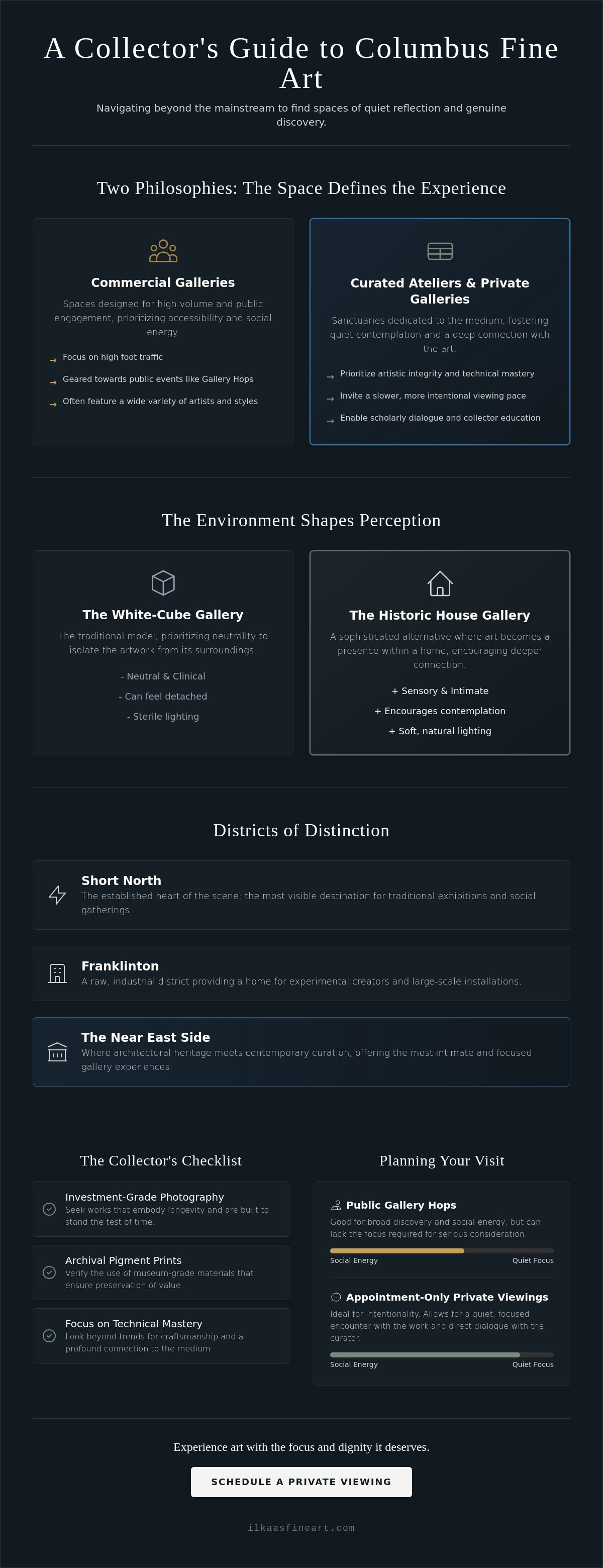
Planning Your Visit: From Gallery Hops to Private Sessions
Engagement with art is a dual experience. It's both a public celebration and a private dialogue. For those exploring local art galleries columbus offers, the choice of when and how to visit defines the quality of the encounter. A public event provides energy and community. A private session offers clarity and focus. Understanding these distinct rhythms allows you to tailor your journey to your specific needs, whether you're seeking inspiration or a permanent addition to your collection.
Approaching a gallery for the first time doesn't need to be an intimidating prospect. These spaces are professional environments dedicated to the preservation of craft. Whether you're visiting a public institution or a private atelier, the goal is the same: to foster a connection between the viewer and the work. By acknowledging your own aesthetic preferences and asking technical questions about archival standards, you transform a simple visit into a scholarly pursuit. This shift in perspective is the first step toward becoming a confident collector.
The Gallery Hop Tradition
The Short North Arts District hosts its monthly Gallery Hop on the first Saturday of every month. On June 6, 2026, from 4:00 PM to 8:00 PM, the district will transform into a vibrant corridor of over 300 independent shops and creative spaces. This event is an excellent entry point for new enthusiasts. You might attend the closing reception for the "24th Anniversary Invitational: A Women's Group Exhibition" on this date, which runs through June 13. However, navigating these crowds requires a strategy. To maintain a sense of meaningful engagement, seek out galleries that offer a more reserved atmosphere or specialized focus. This ensures the social energy doesn't overshadow the technical mastery on display.
Scheduling a Private Consultation
For the serious collector, the social noise of a public event can be a distraction. Scheduling a private consultation at an atelier like Ilkaa’s Fine Art provides the silence necessary for genuine evaluation. This one-on-one time with a curator is an exercise in intentionality. It's a space where technical mastery and archival standards take center stage. Preparing for an art advisory session involves reflecting on your existing environment and your long-term aesthetic goals. These sessions are essential for building a cohesive collection that reflects both your personal taste and a commitment to artistic integrity.
Art advisory services bridge the gap between a single purchase and a legacy collection. This process is methodical and tailored:
- Space Evaluation: Assessing the light exposure and architectural scale of your home or office.
- Medium Selection: Discussing the merits of Limited Edition Prints versus other archival works.
- Investment Goals: Identifying pieces from The Atelier Collection that align with long-term value.
- Preservation Guidance: Ensuring museum-grade framing and archival pigment prints are handled with professional care.
By moving from the public spectacle of the Hop to the quiet focus of a private session, you move closer to the true heart of the work. This is how a collection is built: with patience, scholarship, and a deep reverence for the physical medium.
Cultivating a Legacy of Visual Excellence
Moving from the social energy of the Short North to the quiet focus of a private atelier marks a significant step in a collector’s evolution. You now understand that the true value of a piece resides in its technical mastery and material longevity. By prioritizing archival pigment prints and museum-grade standards, you ensure that your investment remains a permanent fixture of your environment. Columbus offers a rich tapestry of creative expression, but the most profound encounters often happen behind the doors of its most historic residences.
Finding the right local art galleries columbus residents trust for high-level curation involves seeking out spaces that honor the artistic process. Whether you're beginning a new collection or refining an existing one, the physical environment and the expertise of the curator are essential components of the journey. The transition from observer to collector is a path paved with scholarship and a reverence for the physical medium.
We invite you to Experience the Atelier: Book a Private Viewing at Ilkaa’s Fine Art Gallery. Located in the historic Joseph-Cherrington House, our space specializes in museum-grade archival photography curated by internationally respected photographers. It's a sanctuary for those who value the tactile depth of the medium. We look forward to welcoming you into this quiet world of craft and legacy.
Frequently Asked Questions
What are the best art galleries in Columbus for photography?
Ilkaa’s Fine Art Gallery & Atelier is the premier destination for investment-grade photography in the city. Other notable venues include the Riffe Gallery, which frequently showcases regional photographic talent, and the Urban Arts Space for more experimental works. For the serious collector, the focus remains on technical mastery and the physical medium of film rather than digital reproductions.
How does Gallery Hop in Columbus work?
The Short North Gallery Hop takes place on the first Saturday of each month. On June 6, 2026, from 4:00 PM to 8:00 PM, dozens of venues open their doors for public viewing and social engagement. While it's a vibrant entry point into the scene, many serious enthusiasts prefer the quiet focus of a private appointment to avoid the high-traffic crowds of the district.
Where can I buy limited edition art prints in Columbus, Ohio?
You can source high-quality limited edition art prints at specialized local art galleries columbus residents trust for archival standards. Ilkaa’s Fine Art Gallery & Atelier offers Limited Edition Prints and Archival Pigment Prints with verified provenance. These pieces meet rigorous international benchmarks for longevity and technical excellence, ensuring they remain a permanent part of your collection.
Are there art galleries in downtown Columbus open to the public?
Several downtown spaces are accessible to the public, including the Riffe Gallery and the Urban Arts Space. Admission to the Riffe Gallery is free, with hours typically Tuesday through Friday, from noon to 5 p.m. Additionally, the Hilton Columbus Downtown displays a permanent collection valued at 5 million dollars, featuring 450 pieces from 128 local artists throughout its public areas.
What makes a photography print "museum grade"?
A photography print is considered "museum grade" when it utilizes archival pigment prints on acid-free, 100% cotton rag paper. This combination ensures lightfastness and structural stability for over a century. The process requires precise calibration and a deep understanding of the relationship between mineral-based pigments and the substrate to prevent yellowing or fading over time.
How do I start an art collection in Columbus?
Beginning a collection requires research and intentionality. Visit various local art galleries columbus collectors frequent to identify your aesthetic preferences and technical interests. Seek out art advisory services to understand the nuances of archival preservation. Focusing on Limited Edition Prints from reputable ateliers is often the most secure way to begin building a legacy of fine art.
Can I visit Ilkaa’s Fine Art Gallery without an appointment?
Ilkaa’s Fine Art Gallery & Atelier operates as a private space to ensure an intimate and uninterrupted viewing experience. You cannot visit without a scheduled appointment. This model allows the curator to provide personal attention and academic insight during your time in the historic Joseph-Cherrington House, fostering a deeper connection with the works on display.
What is the difference between a gallery and an atelier?
A gallery traditionally serves as a retail or exhibition space for finished works. An atelier is a more intimate environment that functions as both a studio workshop and a curated viewing room. It emphasizes the creative process and the technical heritage of the medium. This setting offers a sophisticated bridge between the creator and the collector in a private, residential context.
Disclaimer
Information is provided for general editorial and educational purposes. Artwork availability, pricing, dimensions, framing, edition details, exhibition information, and event schedules are subject to change. Please contact Ilkaa’s Fine Art Gallery & Atelier for the most current information.
© 2026 Ilkaa’s Fine Art Gallery & Atelier. Article text, gallery photographs, graphics, and other original gallery content may not be copied, reproduced, republished, distributed, modified, or used for commercial purposes without prior written permission. Copyright in individual artworks, artist photographs, and other third-party materials remains with the respective artists, photographers, estates, or rights holders. Brief quotations and links may be used with appropriate attribution where permitted by law.