
What if the most significant element in your home was not the furniture, but the light and shadow captured on a single, archival surface? Selecting a statement art piece for your living room Columbus often feels like an exhaustive search through a landscape of mass-market reproductions. You deserve a work that does more than occupy space. You seek a presence that anchors a room, invites reflection, and preserves a specific narrative for generations.
We recognize the quiet frustration of wanting something exceptional but feeling unsure of how to judge technical mastery or archival longevity. It's difficult to visualize how a photograph will interact with the unique architectural character of a Columbus residence. This guide provides the clarity you need to move beyond mere wall decor. You'll discover the path to acquiring museum-grade photographic works that define your home's identity. We will explore the nuances of the Atelier experience, the importance of limited edition provenance, and the professional standards that ensure your investment holds its value and its beauty.
Key Takeaways
- Learn to distinguish between decorative filler and a true statement piece that anchors your home's narrative.
- Understand the technical standards of archival pigment prints and why limited edition provenance is essential for long-term value.
- Discover how to select a statement art piece for your living room Columbus that complements the specific architectural heritage of your neighborhood.
- Explore how museum-grade photography creates a sense of depth and perspective, transforming the atmosphere of smaller living spaces.
- Transition from a standard shopping experience to a curated advisory at a private atelier to ensure your acquisition is both intentional and professional.
What Defines a Statement Art Piece for Your Living Room?
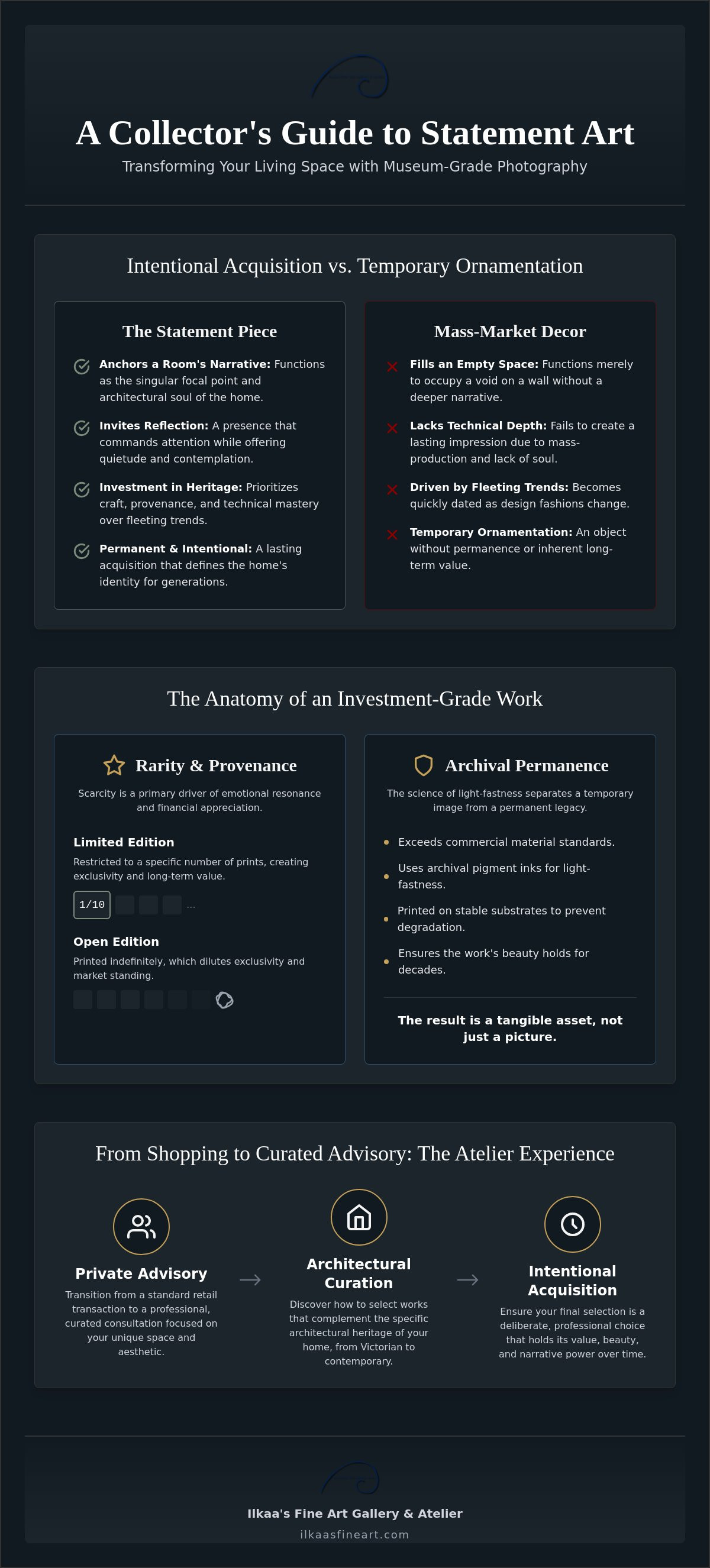
A statement piece is the architectural soul of a home. It functions as a singular focal point, anchoring the aesthetic and dictating the emotional resonance of the entire environment. For the discerning collector, selecting a statement art piece for living room Columbus represents a fundamental shift. It's a departure from temporary ornamentation toward a permanent, intentional acquisition. This isn't merely about filling a void on a wall. It's about establishing a presence that commands attention while offering a sense of quietude.
In the context of Columbus interior design, the focal wall serves as the primary stage for this narrative. Whether situated in a restored Victorian Village residence or a contemporary downtown loft, the space demands a work with significant visual weight. A true statement piece possesses the gravity to define the room’s character. Understanding The Anatomy of a Statement Piece allows a collector to recognize how balance, scale, and contrast within a photograph can anchor a space without overwhelming it. It serves as a visual compass, guiding the eye and setting the tone for every other design choice.
Intentionality vs. Ornamentation
Mass-produced prints often fail to create a lasting impression because they lack the technical depth and historical soul of fine art. They're ornaments, not investments. In contrast, unique or authenticated works like limited edition prints carry an inherent psychological weight. There's a profound difference in how we perceive a work when we understand its provenance and the technical mastery behind its creation. Authenticated works in a communal space act as a reflection of the inhabitant's values. They prioritize craft and heritage over fleeting trends, ensuring the art remains relevant as the home evolves.
Determining Your Aesthetic Narrative
The selection process begins with the narrative you wish to project. The atmospheric flow of a room is often dictated by the texture and light captured within the frame. A minimalist landscape might introduce a meditative stillness to a high-traffic living area, while an evocative monochromatic portrait can invite intense contemplation. When choosing a statement art piece for living room Columbus, consider how the piece invites conversation. Does it offer a window into a specific moment in time? Does the archival quality of the print allow the viewer to linger on the details? These are the elements that transform a house into a curated sanctuary.
The Anatomy of Investment-Grade Art: Archival Standards and Rarity
Distinguishing between a decorative item and a museum-grade acquisition requires an understanding of technical integrity. While mass-market posters are transient, a true investment-grade piece relies on the synergy of rarity and archival permanence. A gallery-quality work is defined by the artist's intent and the physical medium's ability to withstand the passage of time without degradation. This distinction is vital when selecting a statement art piece for living room Columbus, as the environment's light and humidity levels demand materials that exceed commercial standards.
The transition from a casual observer to a serious collector involves recognizing the value of Fine Art Photography as a tangible asset. Unlike open-edition prints found in retail chains, investment-grade photography is produced with a commitment to historical preservation. Every element, from the chemical composition of the ink to the texture of the substrate, is chosen for its stability. This level of craftsmanship ensures that the visual narrative remains as vivid decades from now as it was on the day of its creation.
Limited Edition vs. Open Edition
Scarcity is a primary driver of both emotional resonance and financial appreciation. Open editions are printed indefinitely, which dilutes their exclusivity and long-term value. In contrast, limited edition prints are restricted to a specific number of impressions. For instance, a print designated as "1 of 10" carries a significant degree of rarity that open editions cannot replicate. This scarcity creates a direct link between the collector and the artist's vision. At Ilkaa's Fine Art Gallery & Atelier, the Atelier approach prioritizes these restricted editions, offering collectors in Columbus access to unique photographic works that maintain their standing in the art market.
The Longevity of Archival Pigment Prints
The science of light-fastness is what separates a temporary image from a permanent legacy. Archival Pigment Prints utilize mineral-based pigments rather than the dyes found in standard commercial printing. These pigments are suspended in a specialized carrier that binds deeply to acid-free, 100% cotton rag papers. This combination prevents the yellowing and brittleness associated with cheaper wood-pulp substrates. Archival standards serve as the essential baseline for any serious living room investment. By adhering to these museum-grade protocols, a statement art piece for living room Columbus remains protected against environmental fading.
The final pillar of investment-grade art is the Certificate of Authenticity. This document serves as the legal pedigree of the work, verifying the artist, the edition number, and the archival materials used. It's an indispensable component of high-value acquisition. Those seeking to begin or expand a private collection can explore these standards further through the curated advisory services available at our historic gallery space.
Why Fine Art Photography is the Ultimate Modern Statement
Fine art photography occupies a rare space in contemporary curation. It combines technical mastery with an evocative, human narrative. When you choose a statement art piece for living room Columbus, you aren't just selecting an image. You're choosing a work that interacts with the room’s architecture through light and perspective. Photography acts as a window. It creates an illusion of depth that can transform the perceived dimensions of a space. This is particularly effective in the dense urban lofts of the Short North or the intimate parlors of German Village. The medium bridges the gap between traditional heritage and modern minimalism, offering a sophisticated allure that remains timeless.
The choice between monochromatic and high-chroma works dictates the room's emotional pulse. Monochromatic photography emphasizes form, shadow, and architectural lines, making it a natural fit for structured, minimalist environments. High-chroma works, on the other hand, use color as a physical element to energize a communal space. Both styles rely on the evocative power of the physical medium of film and archival printing to produce a finish that digital reproductions cannot replicate. The result is a presence that feels both intentional and authoritative.
Texture, Light, and the Passage of Time
The tactile quality of high-register photographic papers is often overlooked. These materials possess a specific texture that catches ambient light, making the artwork feel like a living part of the room. In a well-designed living room, light is not just a utility. It's a design element. A museum-grade photograph captures light as a physical substance, preserving a specific moment against the passage of time. This commitment to the medium’s historical roots positions photography as a guardian of high standards and artistic integrity. It's a quiet, powerful reminder of the craft involved in the darkroom and the atelier.
Photography as a Tangible Asset
Collectors are increasingly turning to photography for its technical mastery and historical relevance. It has become a significant category in the market for investment-grade assets. Building a cohesive photography portfolio often begins with a single statement art piece for living room Columbus. This initial acquisition sets a standard for rarity and quality that guides future additions.
- Technical mastery: The precision of large-format film.
- Historical relevance: Photography as a primary record of the human experience.
- Market growth: The rising demand for authenticated, archival pigment prints.
Investing in photography means investing in a medium that values the physical archive. It is a sophisticated choice for those who appreciate the intersection of art, science, and history.
Curating for Columbus: Matching Art to Local Architectural Styles
Columbus possesses a distinct architectural duality. The historic brickwork of German Village and the ornate details of Victorian Village require a statement art piece for living room Columbus that respects heritage without feeling dated. In these spaces, a photograph with deep tonal range or a contemplative subject provides a bridge between 19th-century structure and modern living. The goal isn't to replicate the past but to honor the room's proportions with a work of equivalent weight. A museum-grade print in a classic frame can ground a room filled with original crown molding and hardwood floors.
Conversely, the industrial lofts of the Short North or Downtown Columbus demand a different approach. These environments, often characterized by exposed brick, concrete, and expansive windows, benefit from clean lines and minimalist compositions. To complement these architectural aesthetics, you can visit Artistry Deco Shop for functional art and home accessories designed for modern interiors. Here, the art shouldn't compete with the raw textures of the building. Instead, it should provide a moment of clarity. Large-format photography is particularly effective in these open-plan spaces, serving to define specific zones within a larger room and providing a necessary focal point amidst the industrial scale.
Lighting remains a critical consideration in Ohio, where the quality of natural light shifts dramatically through the seasons. A piece that looks vibrant in the high-noon sun of July might feel somber during a grey January afternoon. Archival pigment prints are essential here. Their specialized finishes minimize glare from large windows while preserving the depth of the shadows even in low-light conditions. This technical resilience ensures your investment maintains its visual impact regardless of the weather outside.
Scale and Placement Strategies
Scale is the most common point of failure in home curation. High-ceilinged Columbus estates require oversized pieces to prevent the wall from swallowing the artwork. A standard guideline is to follow the rule of thirds, ensuring the piece occupies a significant portion of the visual field. To avoid the "floating art" mistake, ensure the piece is anchored to a piece of furniture, such as a sofa or fireplace mantel. The bottom of the frame should typically sit six to eight inches above the furniture to create a cohesive unit rather than a disconnected, drifting object.
Local Curation and Art Advisory
Navigating these variables is where professional advisory becomes invaluable. A Columbus-based advisor understands the local light, the neighborhood aesthetics, and how to match art to your home's architectural soul. This personalized selection process prevents costly aesthetic missteps, such as selecting a piece that is technically proficient but emotionally mismatched with the space. At Ilkaa's Fine Art Gallery & Atelier, we act as a bridge between the creator and the collector, ensuring every acquisition is intentional. For those seeking professional guidance, you can book a private advisory session at our historic atelier to explore how a curated piece can define your environment.
The Atelier Experience: Acquiring Art at Ilkaa’s Fine Art Gallery
The Joseph-Cherrington House stands as a sanctuary for the contemplative collector. Located at 785 E. Broad St. in Olde Towne East, this historic space offers a stark departure from the transactional nature of commercial showrooms. Here, the acquisition of a statement art piece for living room Columbus becomes a deliberate act of curation. The environment is quiet and reverent. It allows the technical mastery of the work to be felt rather than merely seen. This is a place where time slows down; the focus remains entirely on the relationship between the viewer and the physical medium. The gallery, which held its grand opening on May 16, 2026, operates by private appointment to maintain an atmosphere of exclusivity and focus.
Ilkaa Amalia and Millie Franz act as authoritative guides within this space. They bridge the gap between the photographer's vision and the collector's environment. Through The Atelier Collection, they provide access to rare and unique photographic works that are otherwise unavailable to the public. Every acquisition is handled with the weight of traditional institutional standards. It ensures that the piece you select carries both artistic soul and investment-grade integrity. This process honors the heritage of the medium while serving the needs of the modern connoisseur. It is an experience designed for those who value the tactile and historical aspects of fine art.
Private Consultations and Curation
A professional art advisory session is an exercise in vision. During these private appointments, the discussion moves beyond simple aesthetics. We explore how light, scale, and narrative interact within your specific home. The goal is to develop a long-term vision for your collection. It isn't just about one wall. It's about how every work contributes to the home's overall atmosphere. There is an undeniable intimacy in selecting a piece within a space that values craft and heritage. This measured approach ensures that your statement art piece for living room Columbus is a reflection of a refined and intentional life. It provides the clarity needed to avoid the fatigue of generic options.
The Journey of the Collector
Every serious collection begins with a single, significant acquisition. Starting your portfolio with a limited edition print establishes a standard of quality and rarity. It signals a commitment to preserving the physical medium of film and the precision of archival pigment prints. As your collection grows, every piece should carry the same weight of artistic integrity. The journey of a collector is one of refinement and observation. It is a pursuit of works that offer enduring beauty and tangible value. To begin this process, we invite you to Schedule a private viewing at the Joseph-Cherrington House. Experience the quiet confidence of the atelier and discover the work that will define your home's narrative.
Defining the Living Narrative
The acquisition of a statement art piece for living room Columbus marks the beginning of a deeper relationship with your home’s environment. It is a transition from mere decoration to the stewardship of a tangible, investment-grade asset. We've examined the critical importance of museum-grade archival pigment prints and the necessity of aligning art with the unique architectural character of your specific neighborhood. A true focal point does more than occupy space; it establishes a sense of permanence and technical mastery that endures for generations.
Professional art advisory serves as the bridge between the creator’s vision and the collector’s sanctuary. By prioritizing rarity and archival integrity, you ensure that every acquisition carries the weight of a lasting legacy. We invite you to Explore the Atelier Collection and find your next statement piece within the quiet, contemplative halls of the historic Joseph-Cherrington House. Your journey toward a curated and intentional home is a pursuit of excellence that rewards the observant eye. Let the light and texture of fine art define your narrative.
Frequently Asked Questions
What size art piece is best for a standard Columbus living room?
The ideal dimensions for a statement art piece for living room Columbus depend on the scale of your primary wall. A work should typically occupy two-thirds to three-quarters of the width of the furniture it anchors, such as a sofa or fireplace mantel. In the high-ceilinged estates of neighborhoods like Victorian Village, oversized pieces are necessary to prevent the architecture from overwhelming the artwork. Proper scale ensures the piece commands the room without crowding the surrounding space.
How do I know if a photograph is investment-grade?
An investment-grade photograph is defined by its verifiable provenance and adherence to museum archival standards. It must be a limited edition print accompanied by a signed Certificate of Authenticity. Technical mastery in the physical medium, such as the use of large-format film or specialized archival pigment prints, further distinguishes these works from commercial reproductions. Rarity and the artist’s exhibition history are the primary drivers of long-term value.
What is the difference between a limited edition and an open edition print?
Limited edition prints are restricted to a specific, pre-determined number of impressions, which creates inherent scarcity. Once the edition is sold, no further prints of that size are produced. Open edition prints are manufactured indefinitely, which removes the exclusivity required for a serious art collection. For a collector, the limited nature of a work ensures that its value is protected and its presence remains unique.
How should I frame a large statement art piece to ensure its longevity?
Longevity requires the use of museum-grade, acid-free mounting materials and UV-protective glazing. A archival mat or a spacer must be utilized to ensure the print never comes into direct contact with the glass. This prevents moisture trapped by the glazing from damaging the delicate surface of the paper. Professional framing acts as a protective micro-environment, shielding your investment from environmental pollutants and humidity shifts; to ensure your piece is handled correctly, learning what to look for in a provider like First4Frames Gallery can help you secure a museum-quality result.
Can I get professional help choosing art for my specific home layout in Columbus?
Professional art advisory services are essential for matching a statement art piece for living room Columbus to a complex home layout. We offer personalized curation that considers your home’s architectural soul and light conditions. This guidance helps you avoid common errors in scale and ensures the narrative of the work aligns with your personal history. Expert advisory transforms a simple purchase into an intentional acquisition for your private collection.
What are archival pigment prints and why do they matter for home art?
Archival pigment prints utilize mineral-based pigments rather than the dyes found in standard commercial printing. When applied to acid-free, 100% cotton rag paper, these pigments offer exceptional light-fastness and tonal depth. They are the museum standard because they are designed to resist fading and yellowing for over a century. For a home environment, this level of technical integrity ensures the artwork remains a permanent fixture of your interior design.
How do I light a statement piece without damaging the print?
Use UV-filtered LED lighting to illuminate your artwork without introducing harmful heat or ultraviolet radiation. Position the light source at a 30-degree angle to the work to minimize surface glare and distracting shadows. It is vital to avoid placing fine art in the path of direct, unfiltered sunlight. Even museum-grade materials benefit from indirect lighting, which preserves the subtle details of the shadows over time.
Where can I find authenticated, signed photography prints in Ohio?
Authenticated and signed limited edition prints are available at Ilkaa’s Fine Art Gallery & Atelier, located in the historic Joseph-Cherrington House in Columbus. We specialize in museum-grade photography and provide collectors with works of guaranteed provenance. Our gallery offers an intimate, quiet environment where you can observe the technical mastery of the physical medium. We act as a bridge between the creator and the collector, ensuring every piece meets the highest artistic standards.
Disclaimer
Information is provided for general editorial and educational purposes. Artwork availability, pricing, dimensions, framing, edition details, exhibition information, and event schedules are subject to change. Please contact Ilkaa’s Fine Art Gallery & Atelier for the most current information.
© 2026 Ilkaa’s Fine Art Gallery & Atelier. Article text, gallery photographs, graphics, and other original gallery content may not be copied, reproduced, republished, distributed, modified, or used for commercial purposes without prior written permission. Copyright in individual artworks, artist photographs, and other third-party materials remains with the respective artists, photographers, estates, or rights holders. Brief quotations and links may be used with appropriate attribution where permitted by law.